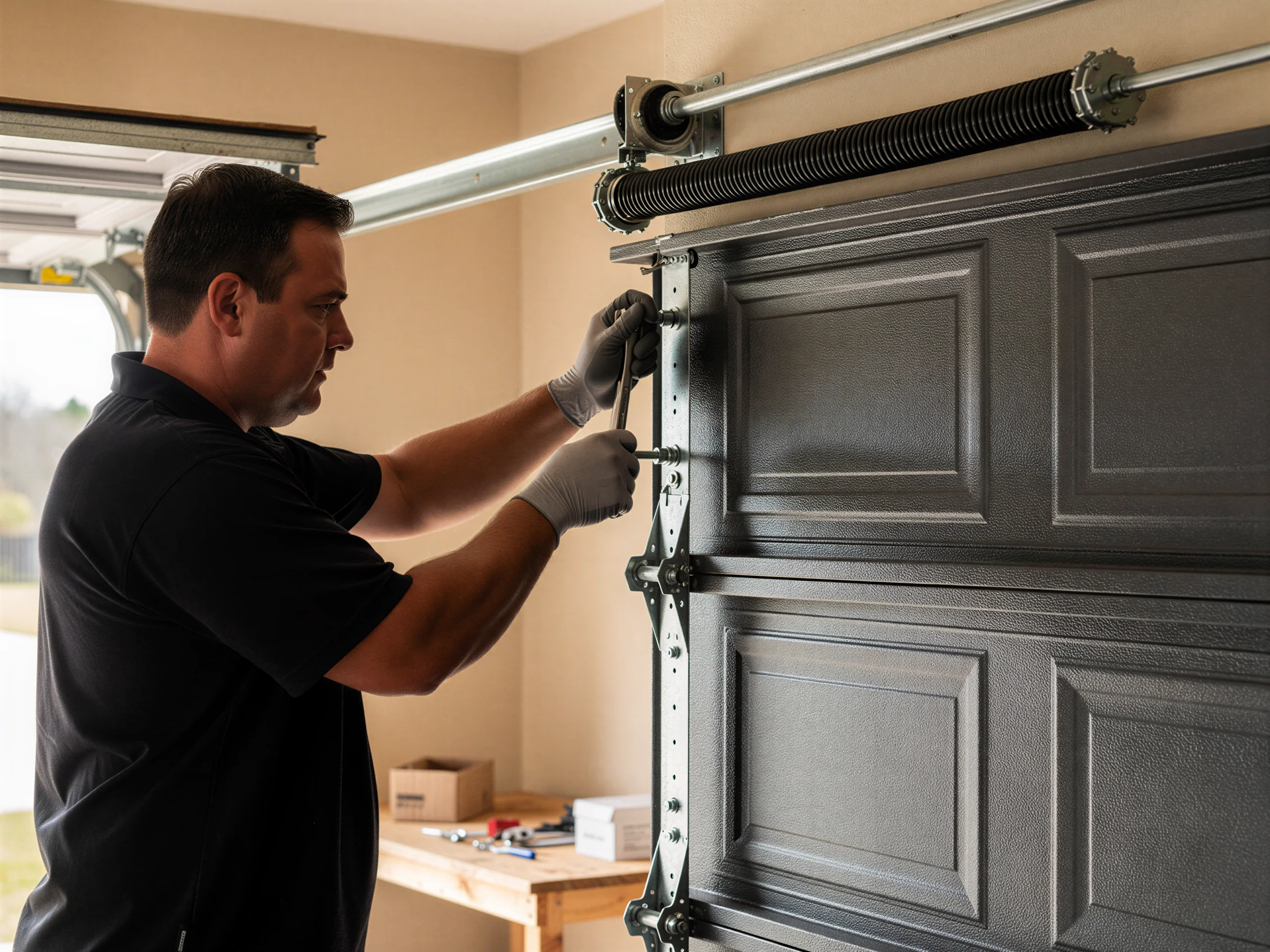
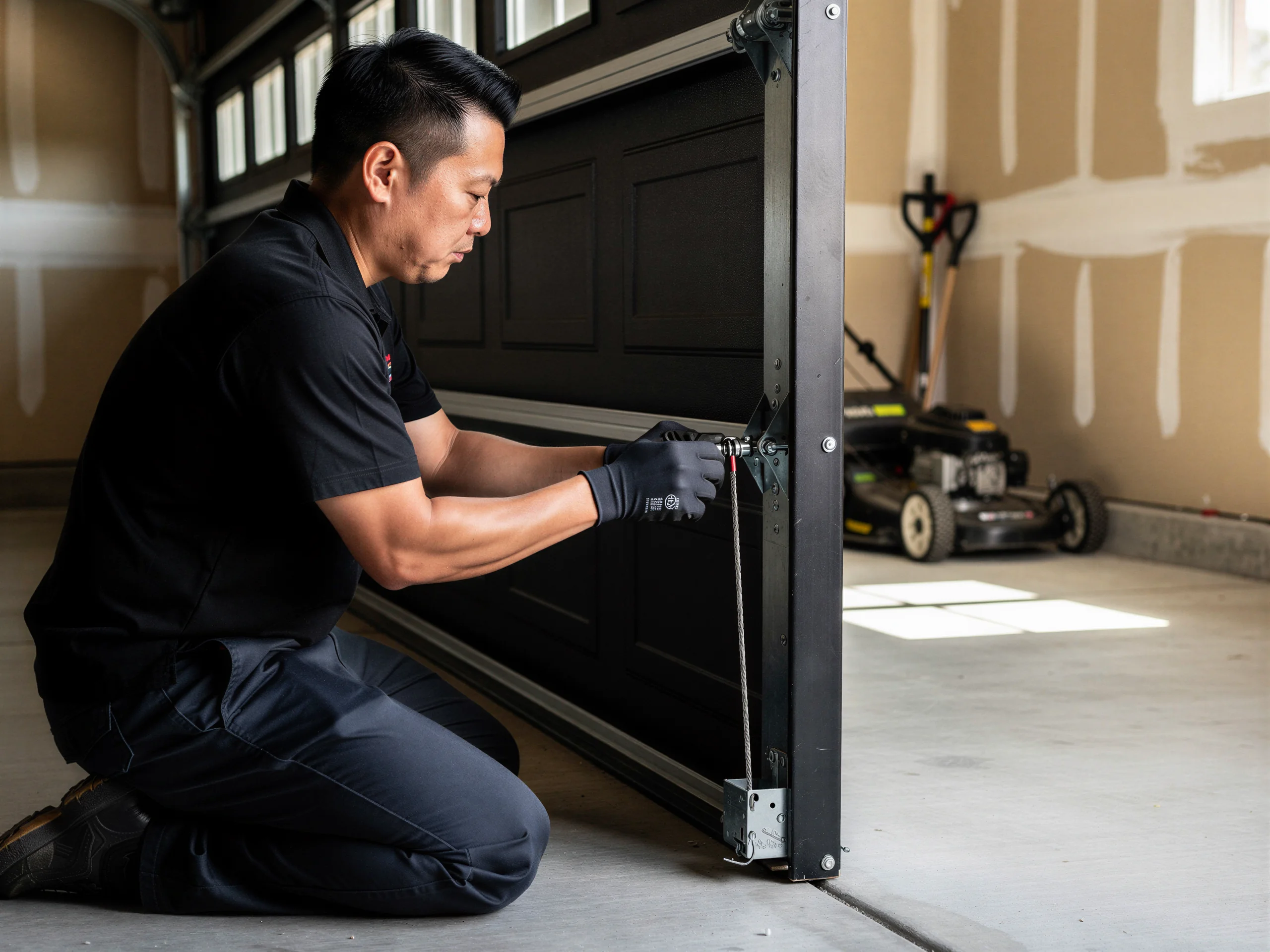
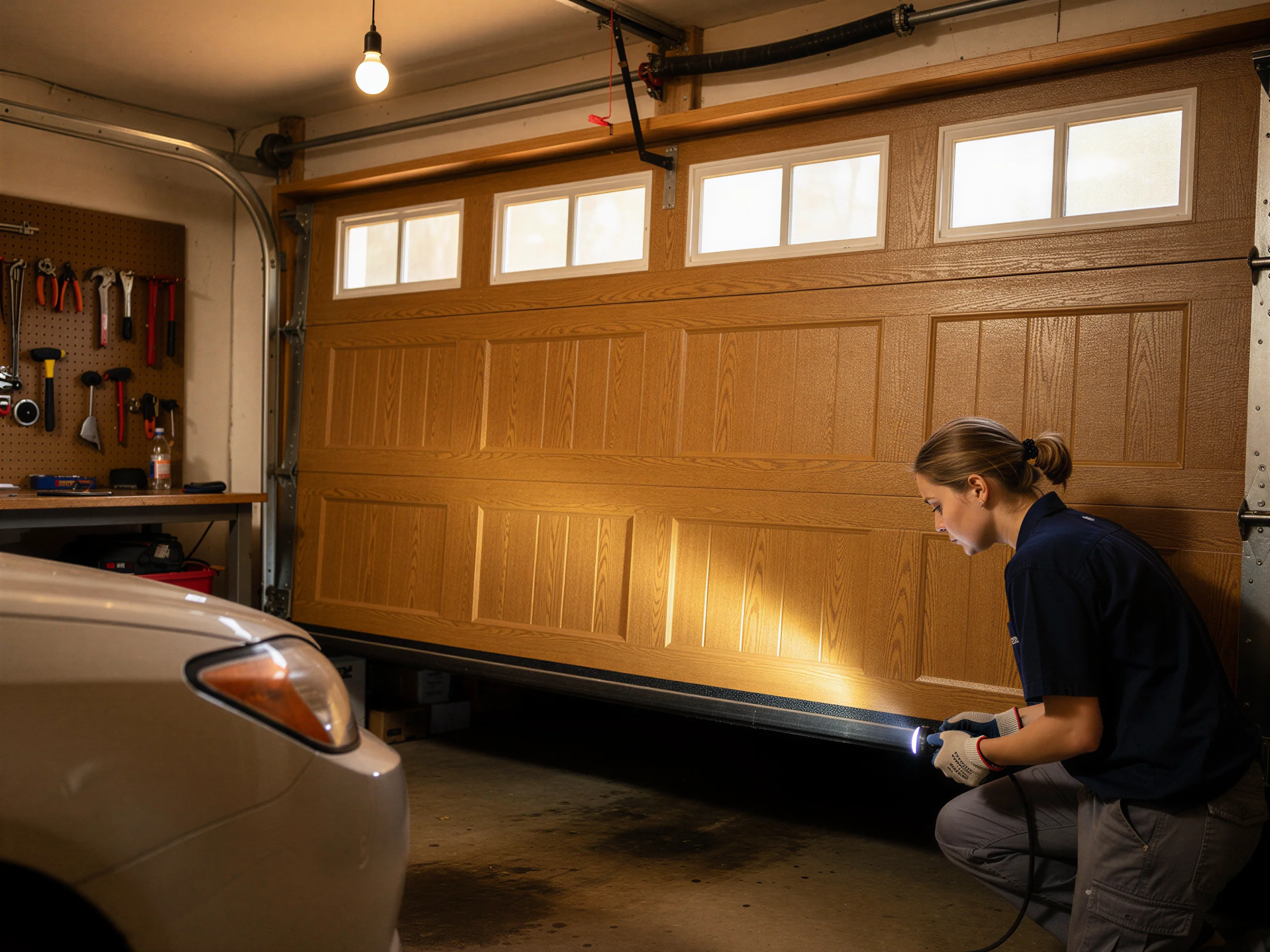
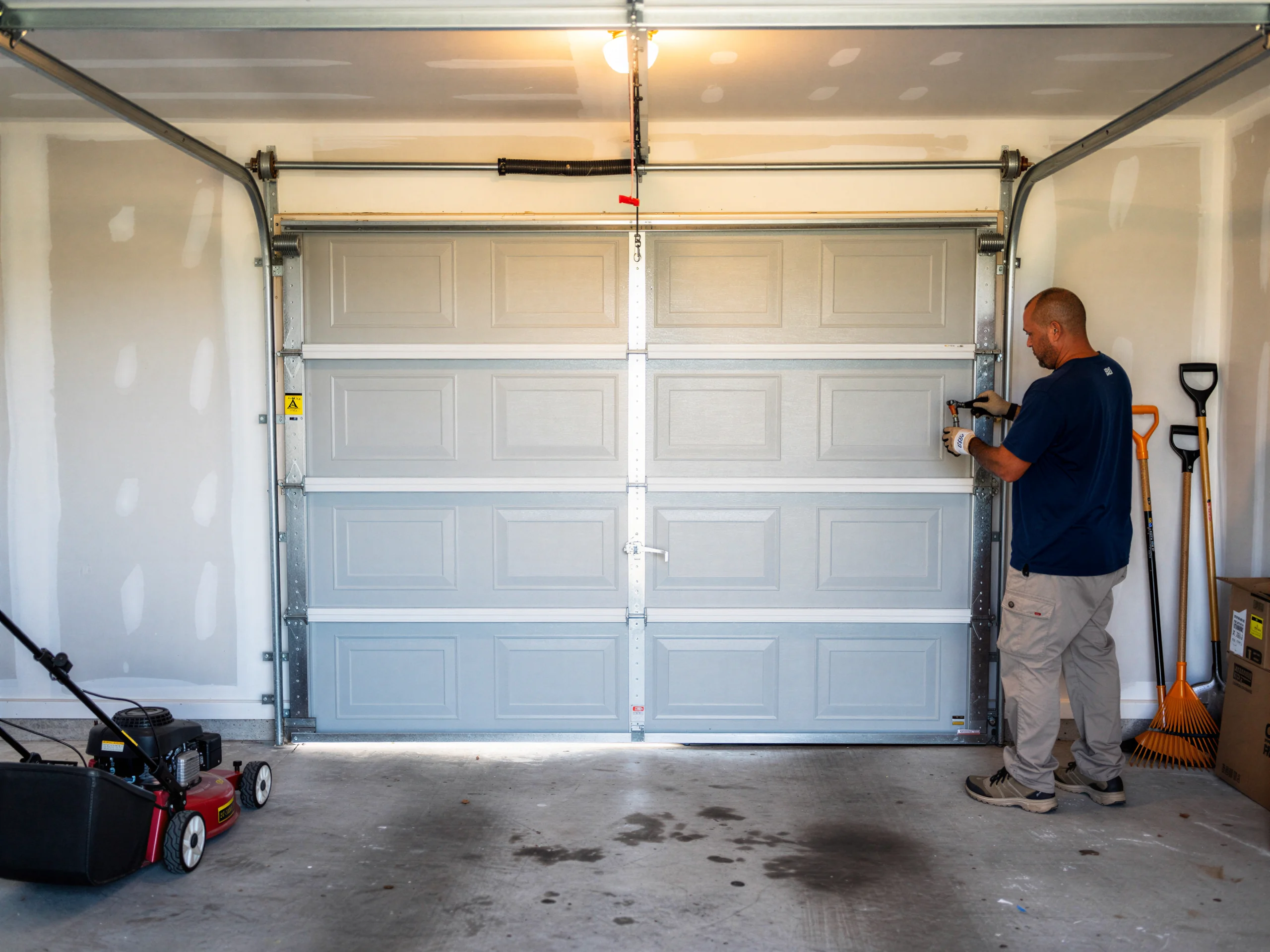
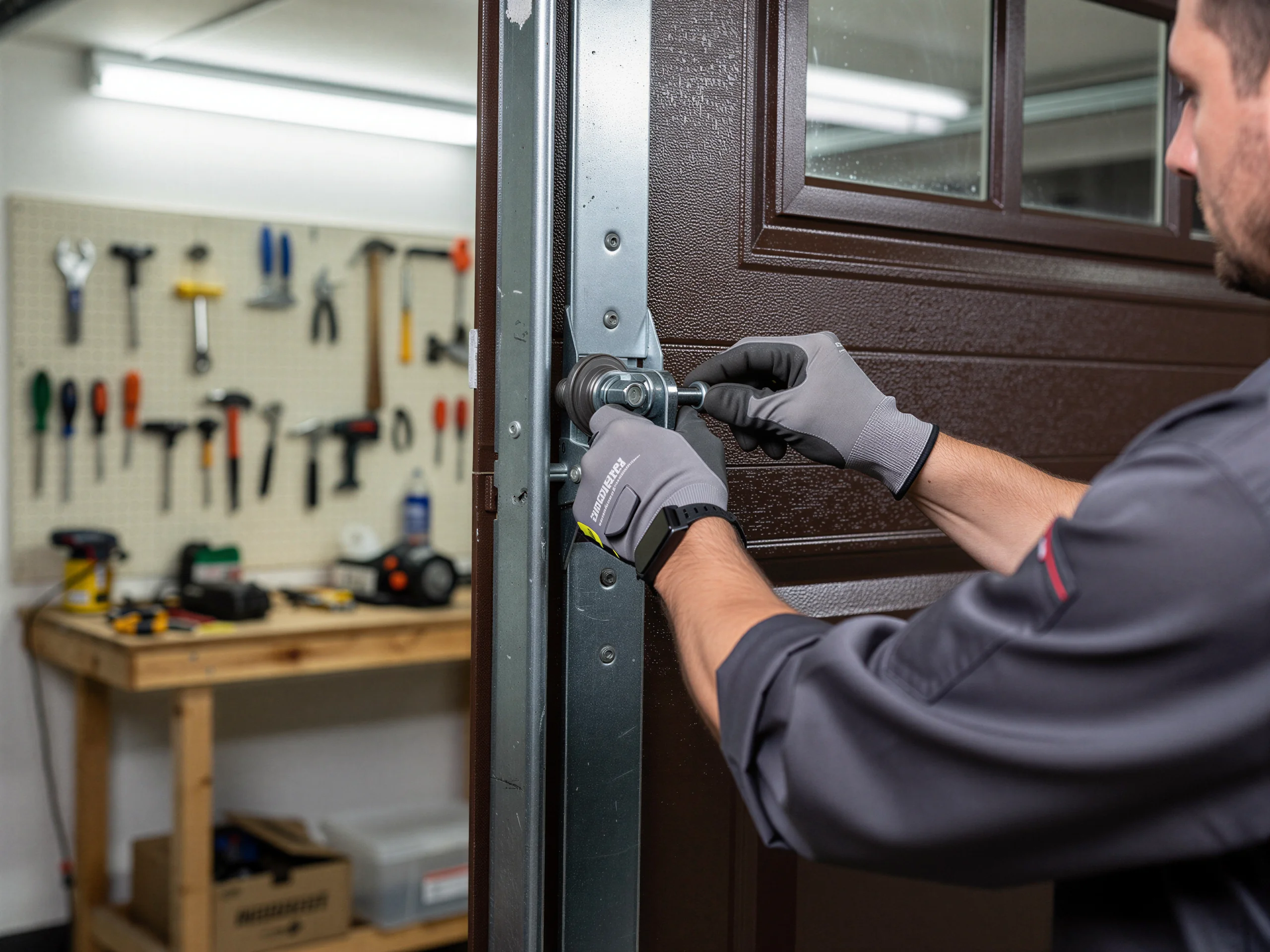
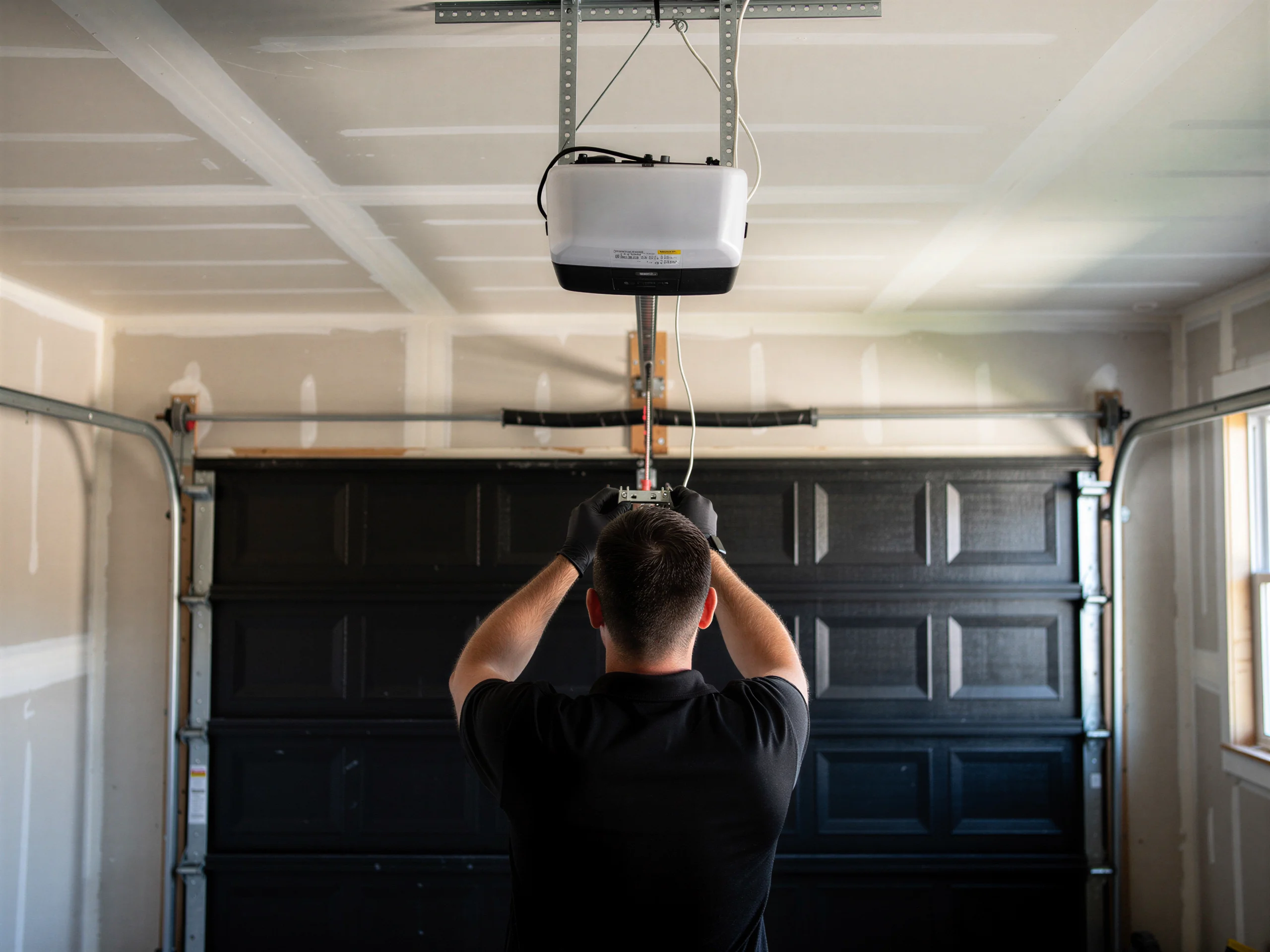
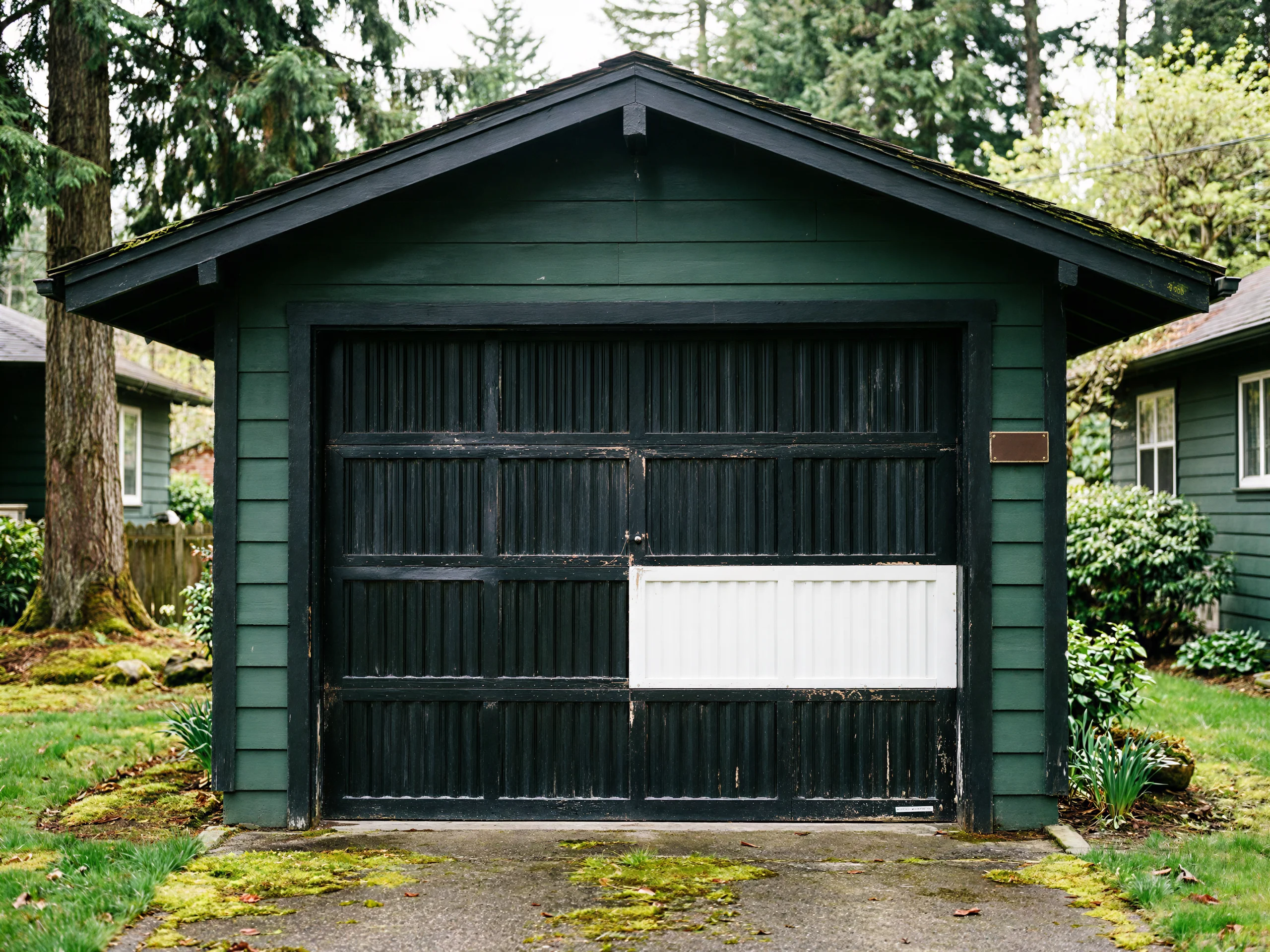
Some of it, yes. You can visually check the tracks for dents or gaps, wipe down and lubricate the rollers and hinges with a garage-door-rated lubricant (not WD-40, which washes grease out rather than adding it), and listen for new sounds on the way up and down. You can also test the auto-reverse safety feature by placing a block of wood under the door and running it down. What you shouldn't touch is the torsion spring itself - the one over the header, under tension, that does the real lifting work. On a door this age, that spring has often outlived its rated cycle life, and a spring failing under load is the single most common injury we hear about in this trade. If you're not sure how old your spring is, that's reason enough to have it looked at rather than guessed at.