Drum groove matching
Drums matter more than people think - the groove pitch has to match the cable gauge or the cable walks off the drum again within a season, which is the single most common repeat call we see.
Shoreline, WA
Garage door cables snap without warning on Shoreline homes built 1965-2001. Here's what cable repair actually involves, and why it fails the way it does here.
Local causes
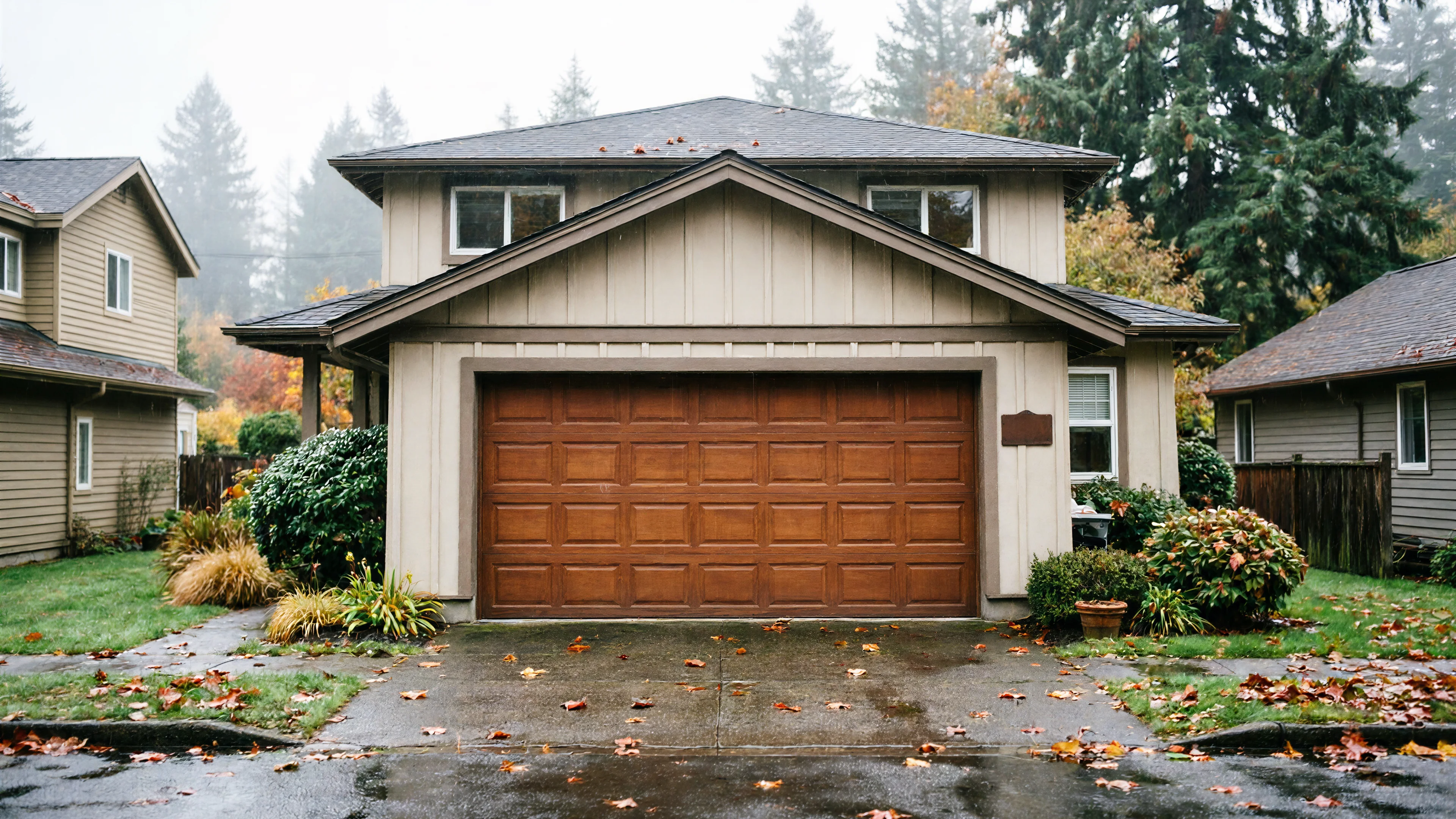
Most houses across this area went up between 1965 and 2001, with the bulk of the stock sitting around 1985 - meaning a lot of garage doors out there are still running close to their original cable and drum hardware, now pushing thirty to fifty years of wear. Galvanized cable has a service life, and torsion-system cable that's never been swapped starts shedding strands right around that age window regardless of how the door's been used.
The area's cold, moderate climate adds to it. Repeated damp-and-dry cycles work into the cable strands over the decades, rusting them from the inside where you can't see it until a strand lets go. That's different from a dry climate, where cable tends to fail from UV and heat fatigue instead - here it's corrosion working under the galvanizing.
With 103,888 owner-occupied houses across the roughly 202,623 households in this area, that's a large base of homes hitting the same age-and-climate combination at the same time, which is why cable calls cluster the way they do. At a median household income of $118,077, most owners we talk to choose to replace both cables as a pair and move on, rather than patch one side and wait for the other to go.
On the truck
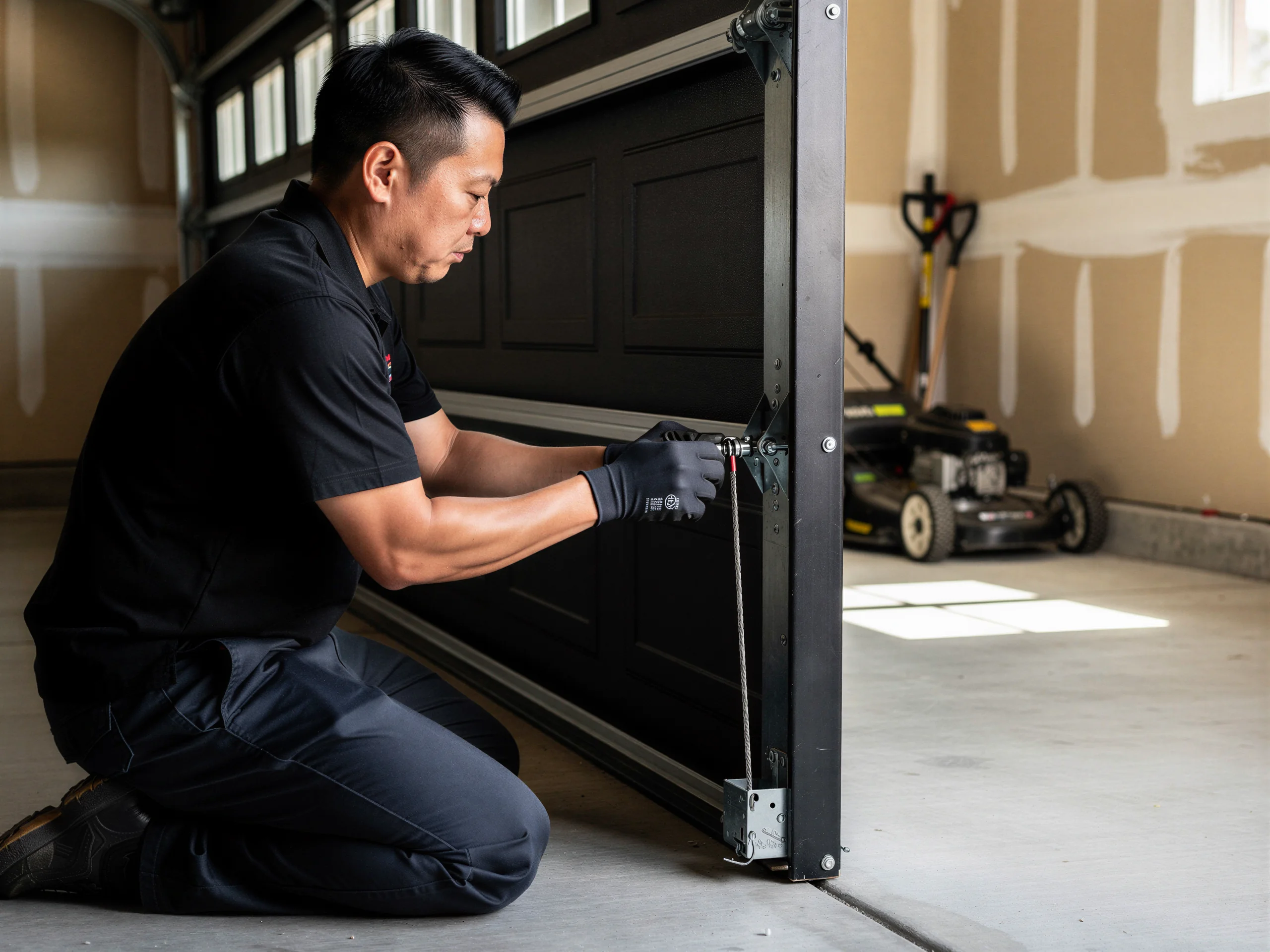
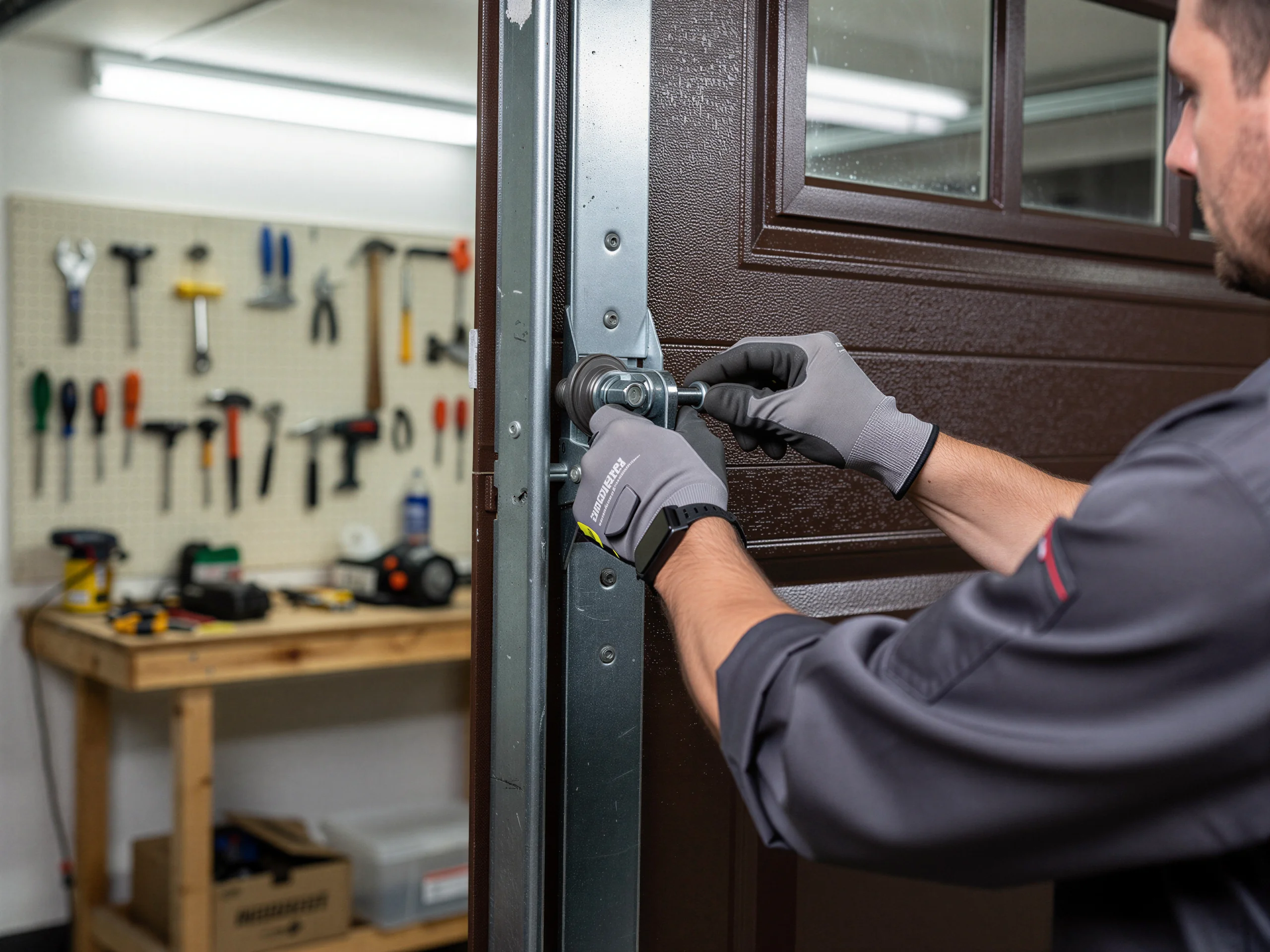
Cable repair starts with the cable, but the job only holds if everything around it matches. We carry galvanized aircraft cable in the diameters used on both torsion and extension spring systems, along with the cable drums it winds onto, bottom brackets, and the safety cables that run through extension springs on older setups.
Drums matter more than people think - the groove pitch has to match the cable gauge or the cable walks off the drum again within a season, which is the single most common repeat call we see.
Most of the service area's housing dates from 1965 to 2001, with a heavy cluster from the 1980s and 90s, so we stock the drum and cable combinations that fit that era's standard torsion hardware. We don't carry every low-headroom or oddball extension-spring drum pattern off the truck, though - some of the pre-1980s setups still in use need a part ordered in, and that's a lead-time job, not a same-visit one.
We'll tell you straight if your door falls into that category before we start, not after. We replace lift cables in pairs, not one at a time, because a cable that's frayed on one side has usually stretched evenly on both.
Warning signs
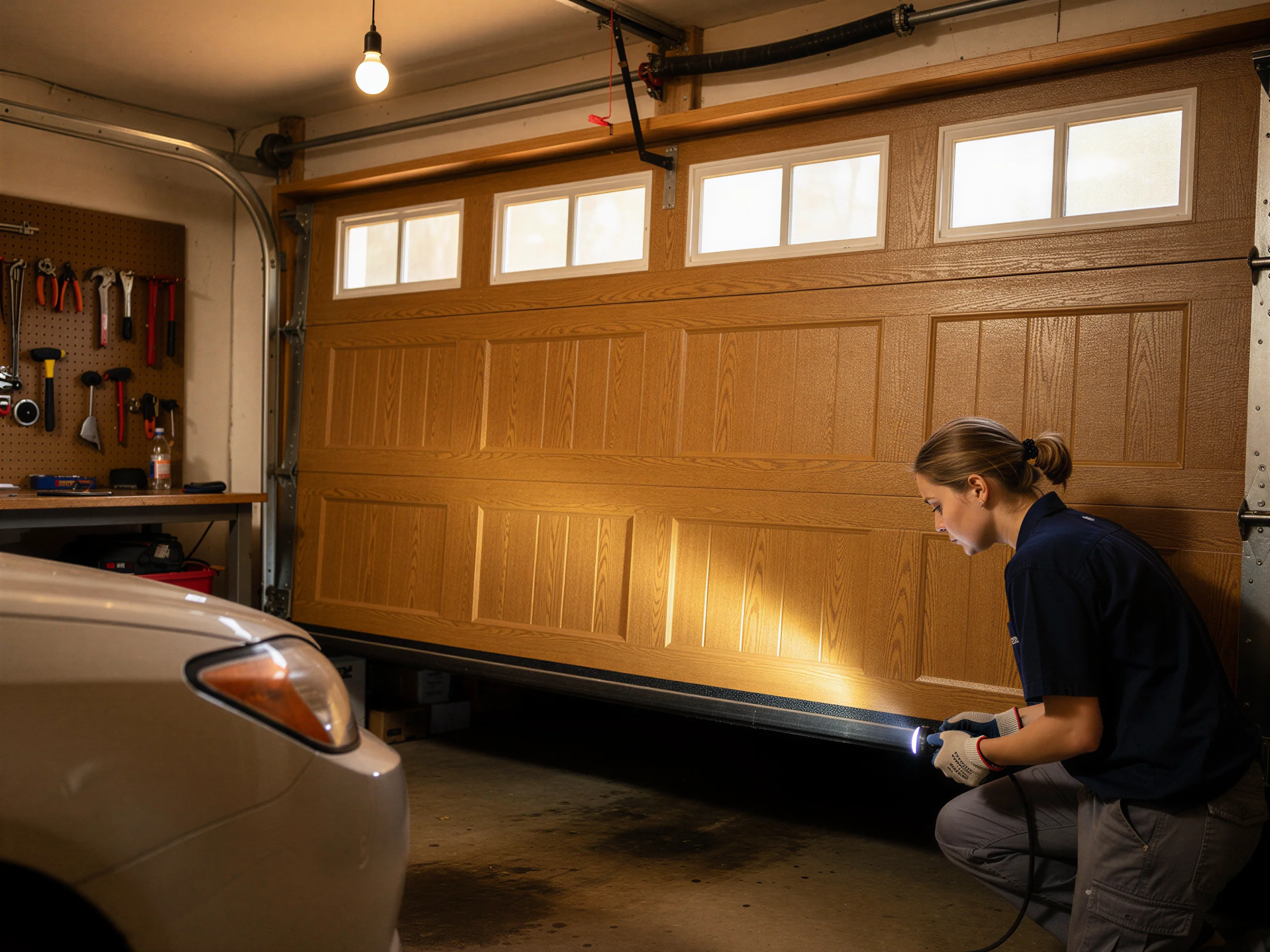
A cable going bad rarely announces itself cleanly. The most common version: the door starts hanging a half-inch to an inch lower on one side, just enough that it doesn't sit flush in the frame anymore.
Look at the drum at the top of the track and you'll often see loose wraps of cable bunching instead of sitting tight in the groove - that's the cable starting to slip. Fraying is the other tell. If you can see individual strands standing up off the main cable line near the bottom bracket, that section is close to going.
Some owners catch it there. Others find out when the cable lets go all at once - the door drops hard on one side, sometimes comes off the track, and the opener either strains against it or stalls out mid-cycle with a bang that's hard to miss from inside the house.
A cable that's jumped the drum but hasn't snapped yet will usually let the door run crooked for a while before it fails outright, so a door that's sitting even slightly off-level is worth a look before it becomes an emergency call.
The repair
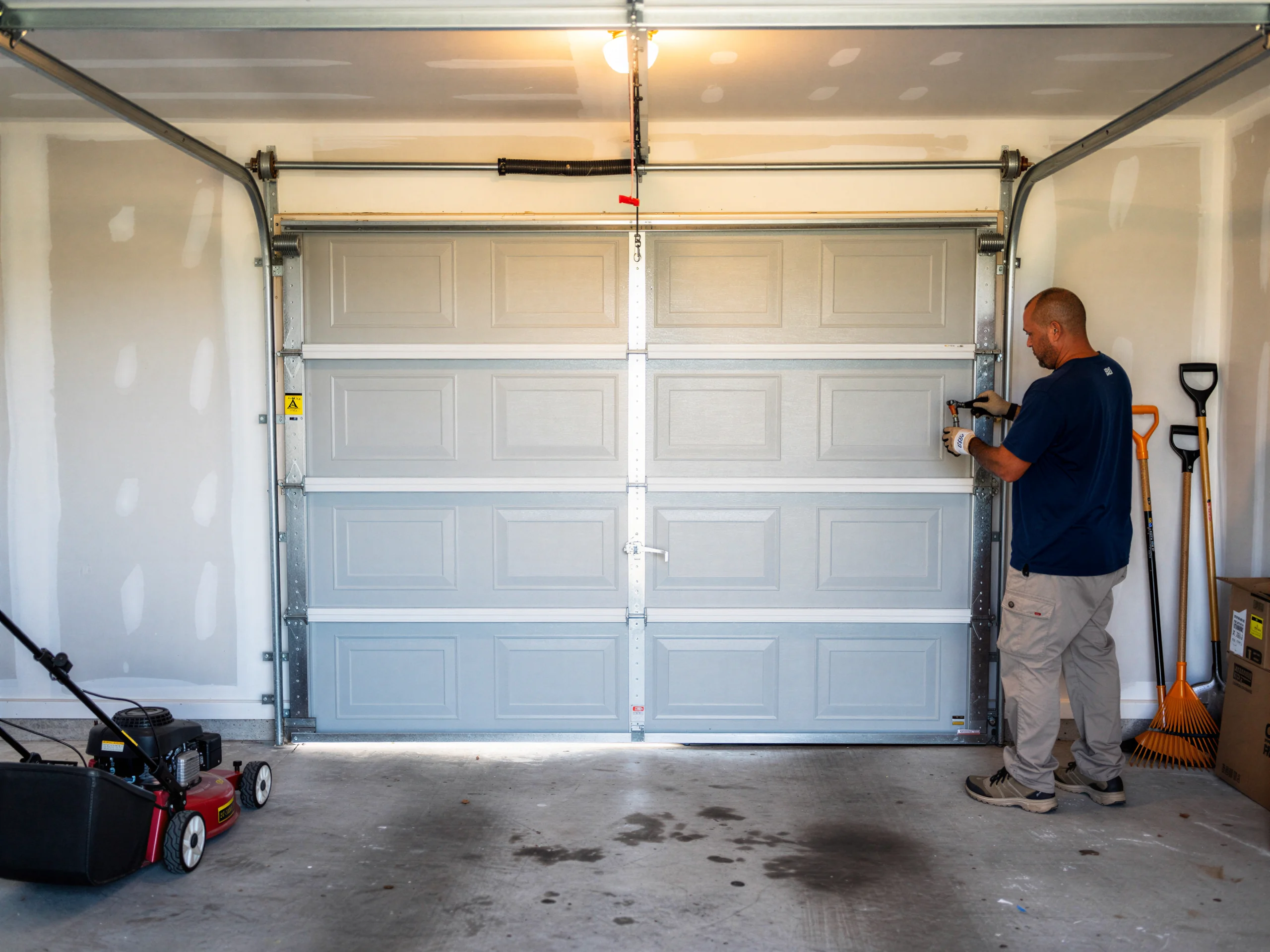
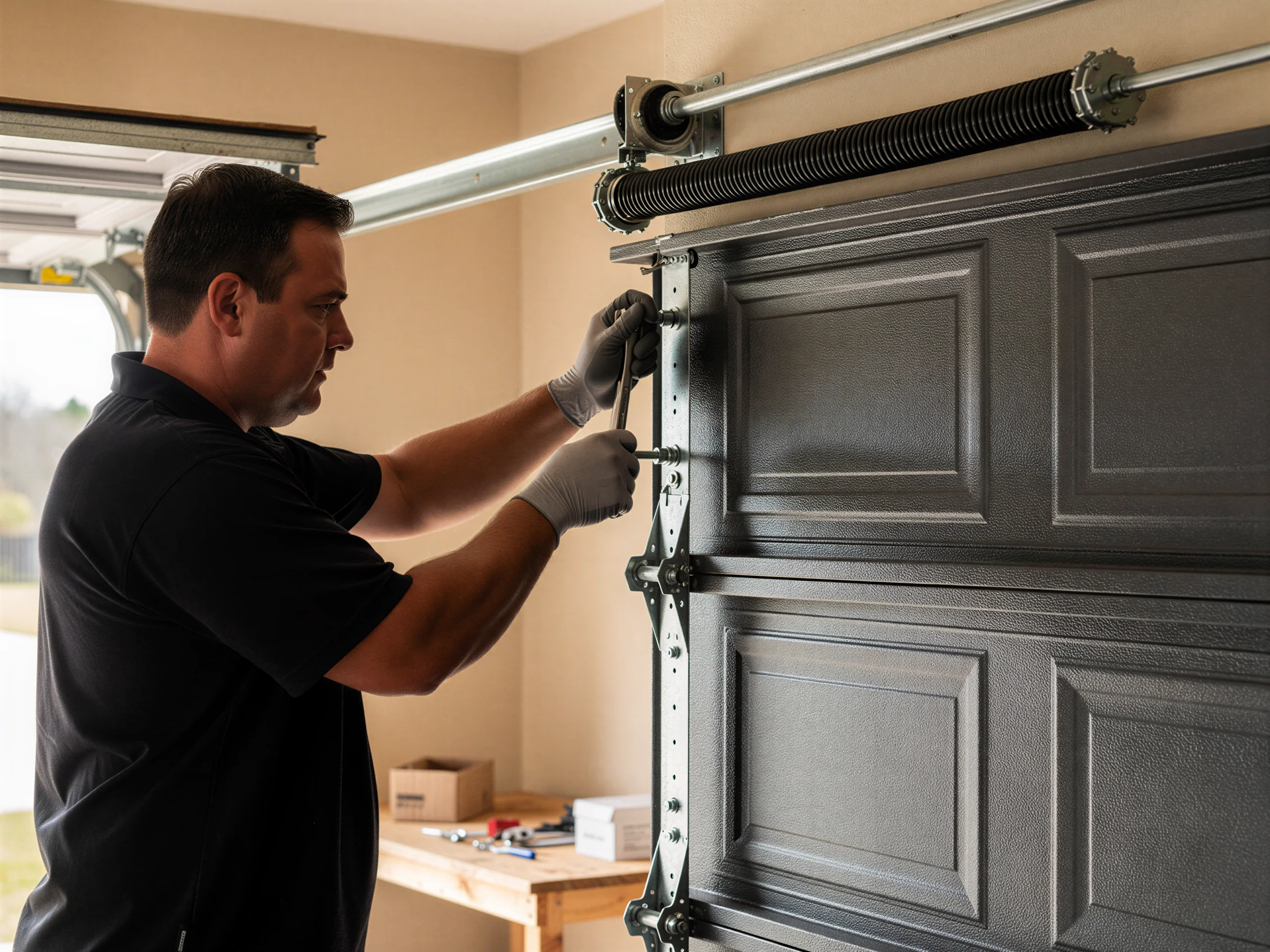
The spring has to come out of tension before a cable gets touched - that's not optional, and it's the part of the job that actually takes skill, not the cable swap itself.
Once the spring is unwound, the drums come off, the old cable gets measured against the door's actual drop height (not just swapped length-for-length, since stretched cable reads long), and new cable gets cut, looped, and seated into the bottom bracket and drum groove.
We replace both cables together even when only one has failed, because the other side is carrying the same age and the same wear pattern. Re-tensioning the spring to match the door's weight comes next, then the door gets run through a full open-close cycle to check it tracks straight and holds position halfway open without drifting.
That balance test is what tells you the job's done right - a door that creeps down on its own with the opener disconnected still has a tension problem, even with new cable on it. Most cable jobs run one visit, start to finish, unless the drum pattern needs an ordered part.
Questions
A snapped torsion spring usually makes a loud bang and the door won't budge at all, even with the opener. A failed cable tends to let the door drop crooked on one side while the other side still holds - the door looks lopsided rather than completely stuck. Either way, don't force the opener; it strains the motor and can bend the track.
You can, but we don't recommend it. Both cables go on at the same time and carry the same years of wear, so the second one is usually close behind. Replacing them as a pair costs little extra in labor and avoids a second service call a few months out.
No. A frayed cable under tension can let go without warning, and a door dropping suddenly is a real injury risk if anyone's near it. If you see standing strands near the bottom bracket or loose wraps on the drum, treat it as urgent rather than something to get to later.
Explore more
Ready when you are
Shoreline Garage Door Pros repairs and installs garage doors, springs and openers in Shoreline, WA and the surrounding area.