Common width panel stock
We stock replacement sections sized for the common widths used across this service area's 41 named neighborhoods, and we order the rest from suppliers who still carry profiles for doors this old.
Shoreline, WA
Shoreline homes built mostly 1965-2001 have steel and wood panels that dent, rust, and warp differently. We match panels to your door's age and climate exposure.
Local causes
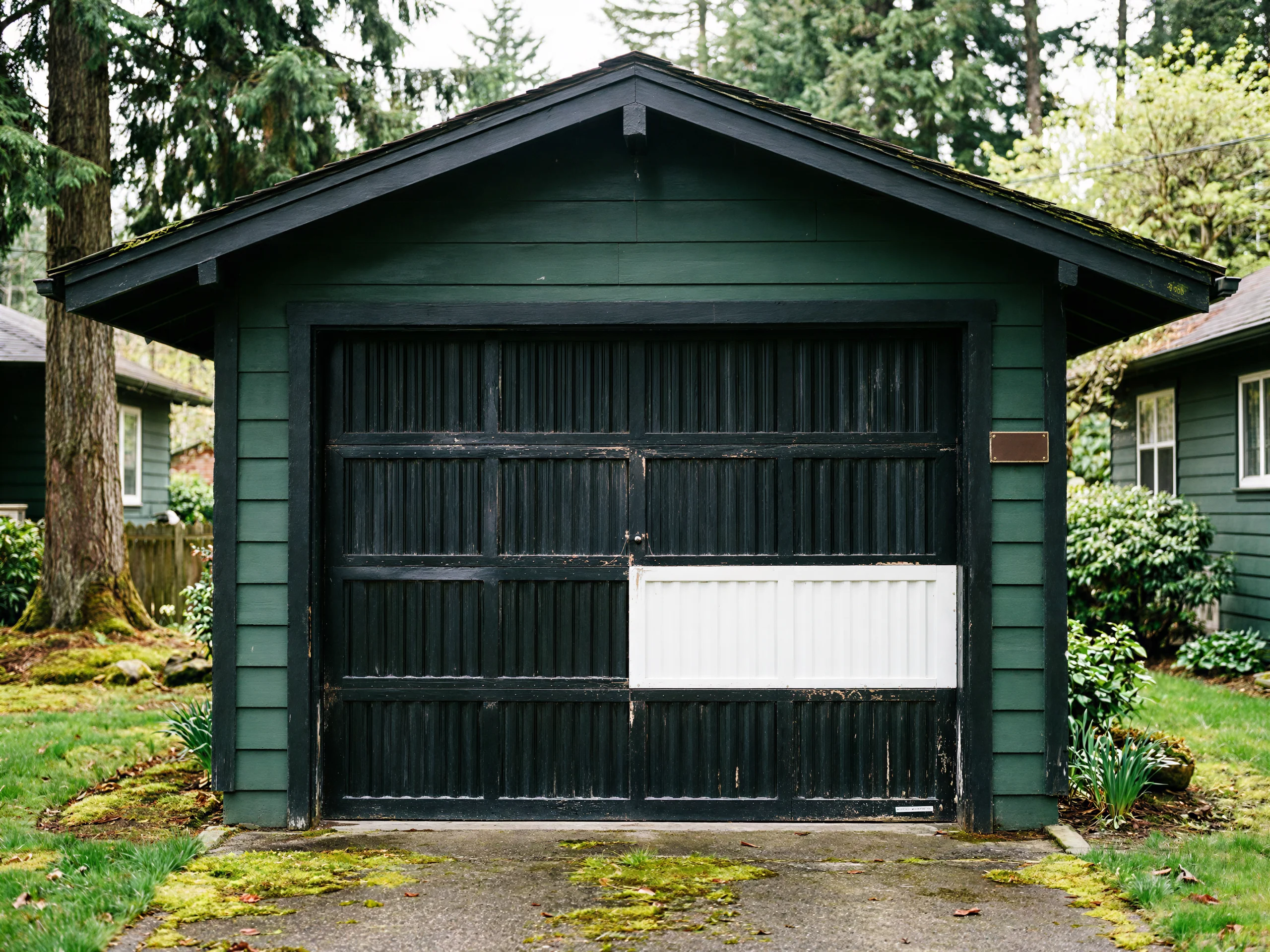
The housing stock across this service area runs mostly 1965 to 2001, with a median build year around 1985 - old enough that a lot of original doors and their first-generation steel replacements are still in service. Steel panels from that era used thinner gauge metal and simpler foam cores than what's sold today, so they dent deeper and rust faster once the paint breaks.
Pair that with a cold, moderate climate band: repeated freeze-thaw cycles and damp winters work into any crack in the paint or seam in the panel seal, and that moisture does its damage from the inside out, which is why a panel can look sound from the driveway and still be rusted through at the bottom lip. In a service area built out mostly in one 35-year window, a lot of doors are hitting panel failure at roughly the same age, which is why this is one of the calls we get most consistently across the whole region, not just in any single neighborhood.
On the truck
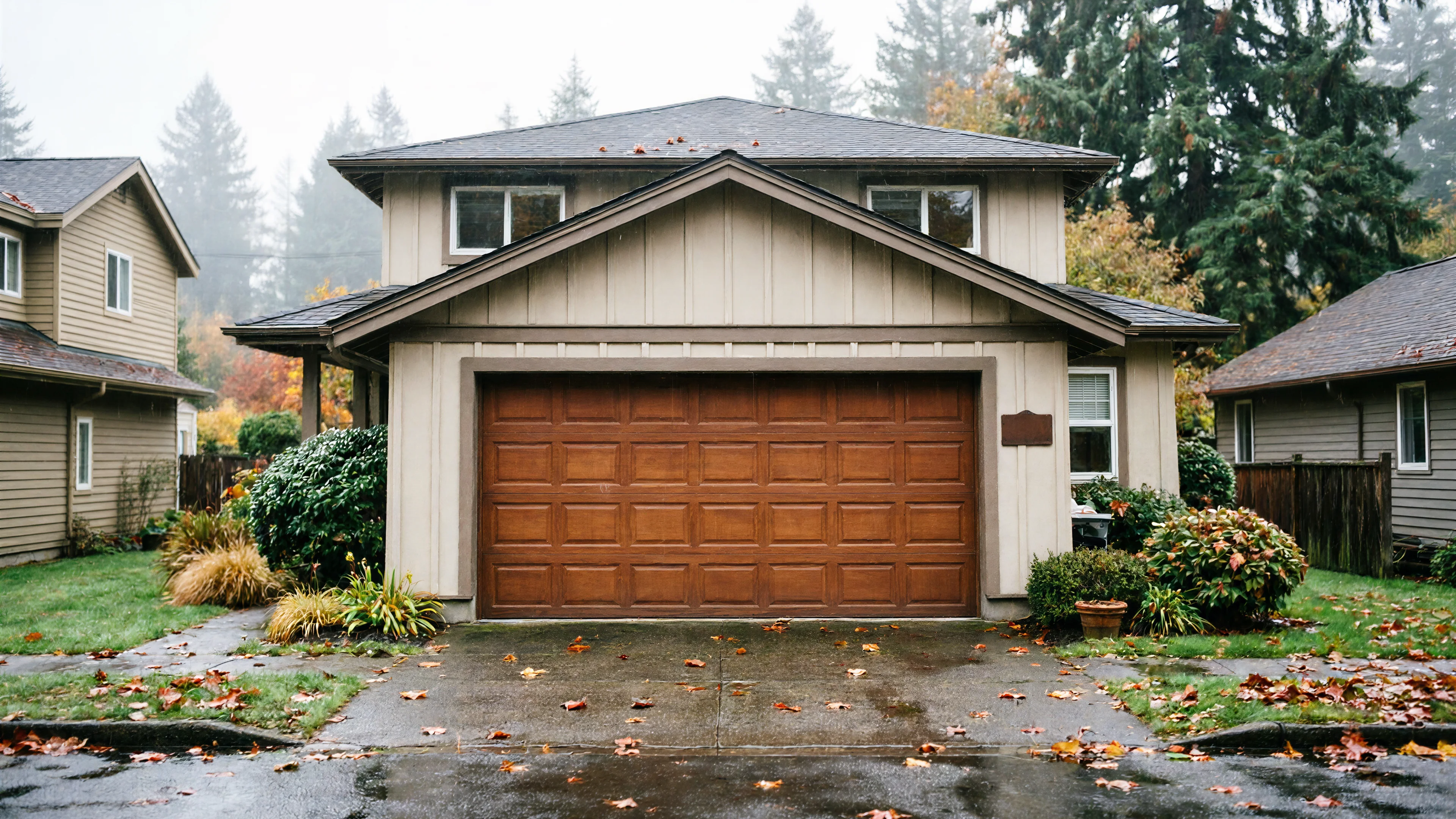
Most garage doors around here date from the mid-1960s through the early 2000s, with a heavy concentration in 1980s and 90s builds. That means the panel sections we're asked to match are mostly steel sandwich panels with foam cores, some older solid wood or hollow-back steel from doors that have never been touched, and a smaller share of newer insulated steel from remodels.
We stock replacement sections sized for the common widths used across this service area's 41 named neighborhoods, and we order the rest from suppliers who still carry profiles for doors this old.
One thing we won't do is promise an exact color or finish match on a 30-year-old door - the original paint has faded and the new panel will look slightly different until it weathers. If that matters to you, full door replacement is the honest answer, not a mismatched panel.
We carry standard raised-panel and flush steel sections in the widths that fit torsion and extension systems common to this era of construction. For doors where the track and hinge spacing is non-standard, we measure on site before ordering rather than guessing off a phone description.
Warning signs
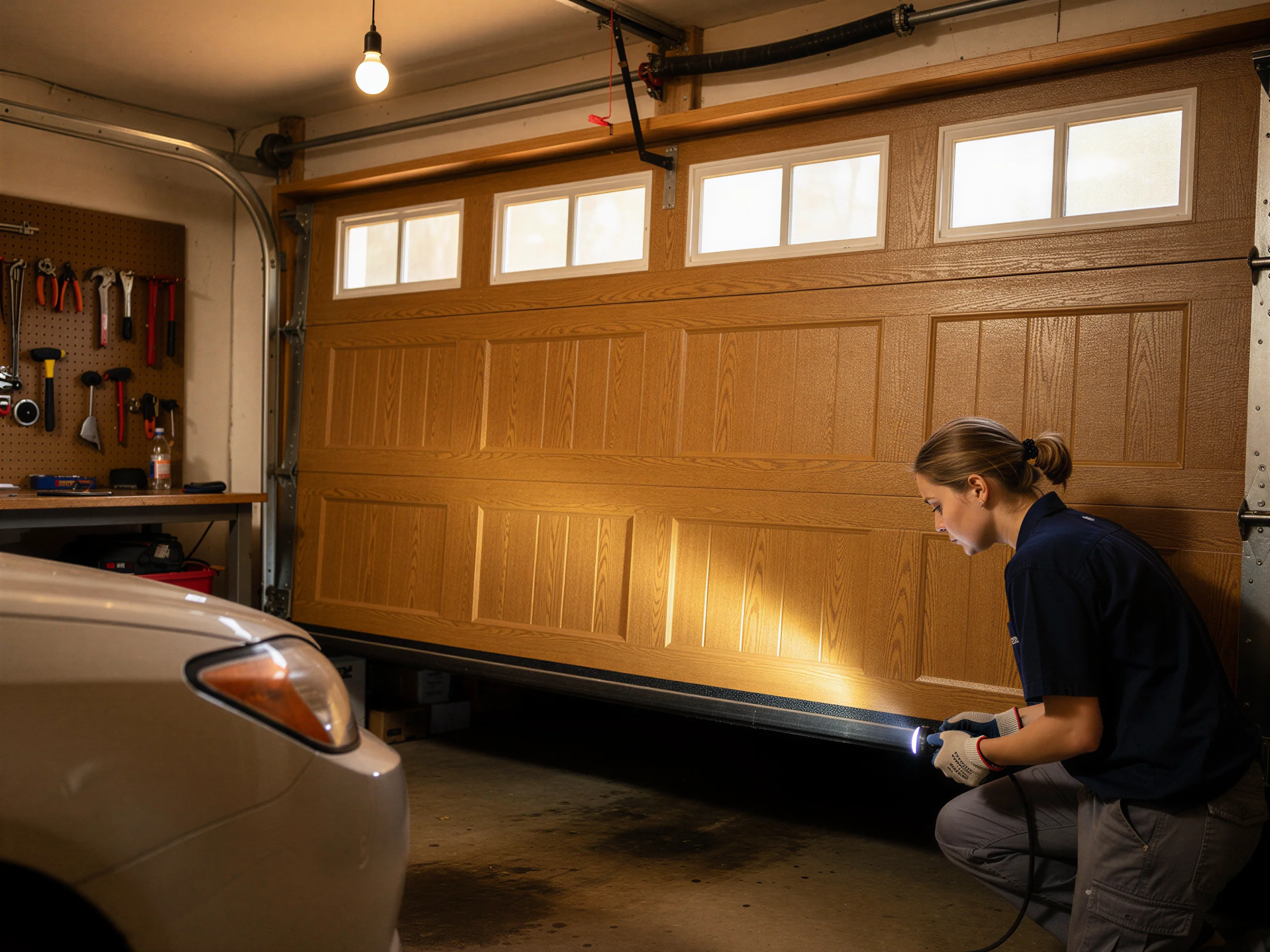
A damaged panel rarely stays cosmetic. The most common call is a dent or crack on the bottom section from a car bumper or a kid's bike, but the panel that actually forces a repair is usually one with a bowed or buckled midsection - that's the panel taking the stress every time the door cycles, and it starts binding the rollers in the track.
In this climate band, cold and damp cycles swell wood panels and condense moisture inside foam-core steel panels that have lost their seal, so a panel that looks fine in August can be visibly sagging by January.
On older steel doors - the kind common in 1980s and 90s construction here - rust starts at the bottom edge where water sits after rain and never fully dries between storms.
By the time it's visible from the driveway, the steel behind the paint is usually already thinning. We see this most on doors that face away from the sun and stay damp longer after weather moves through.
The repair
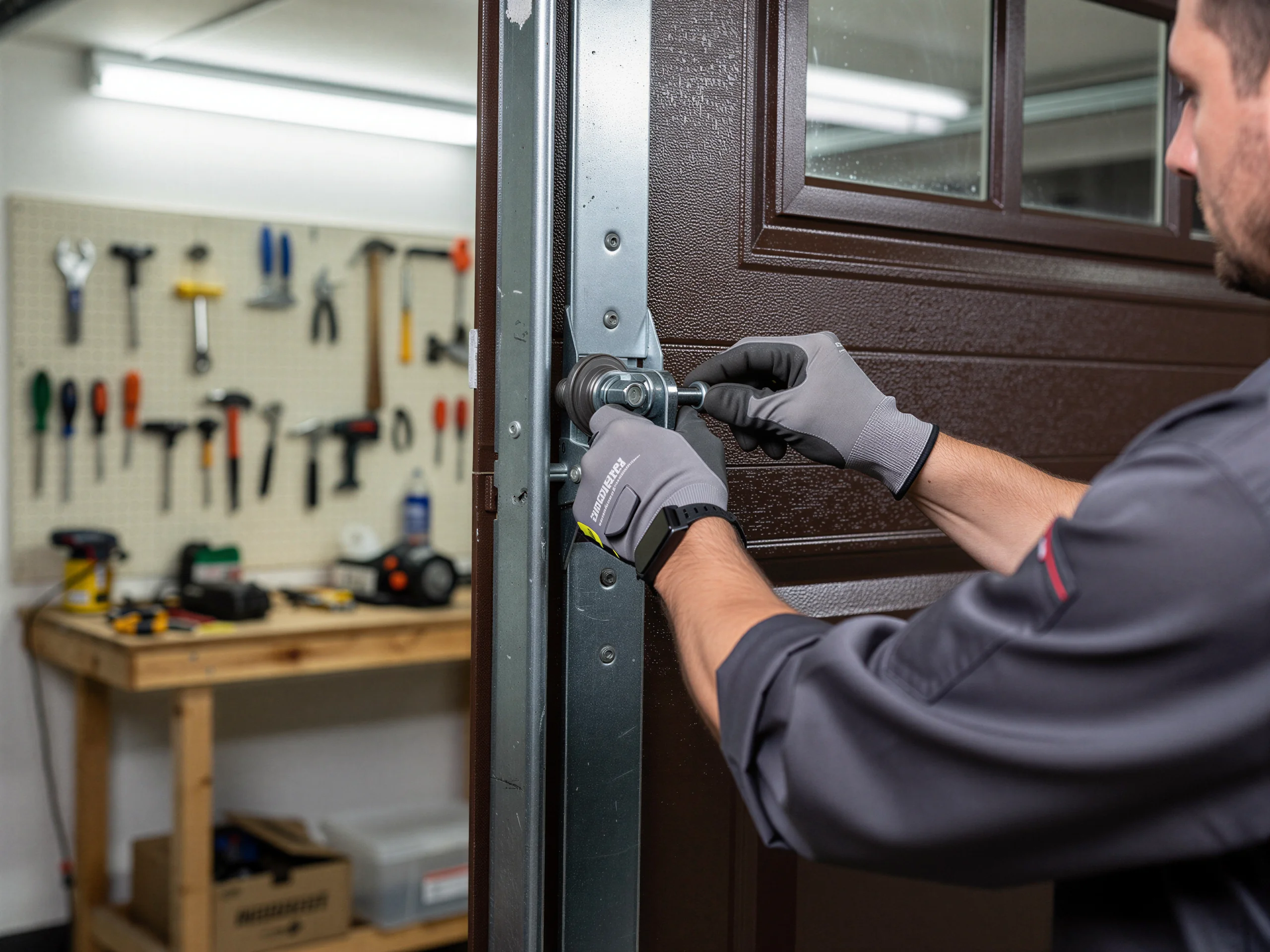
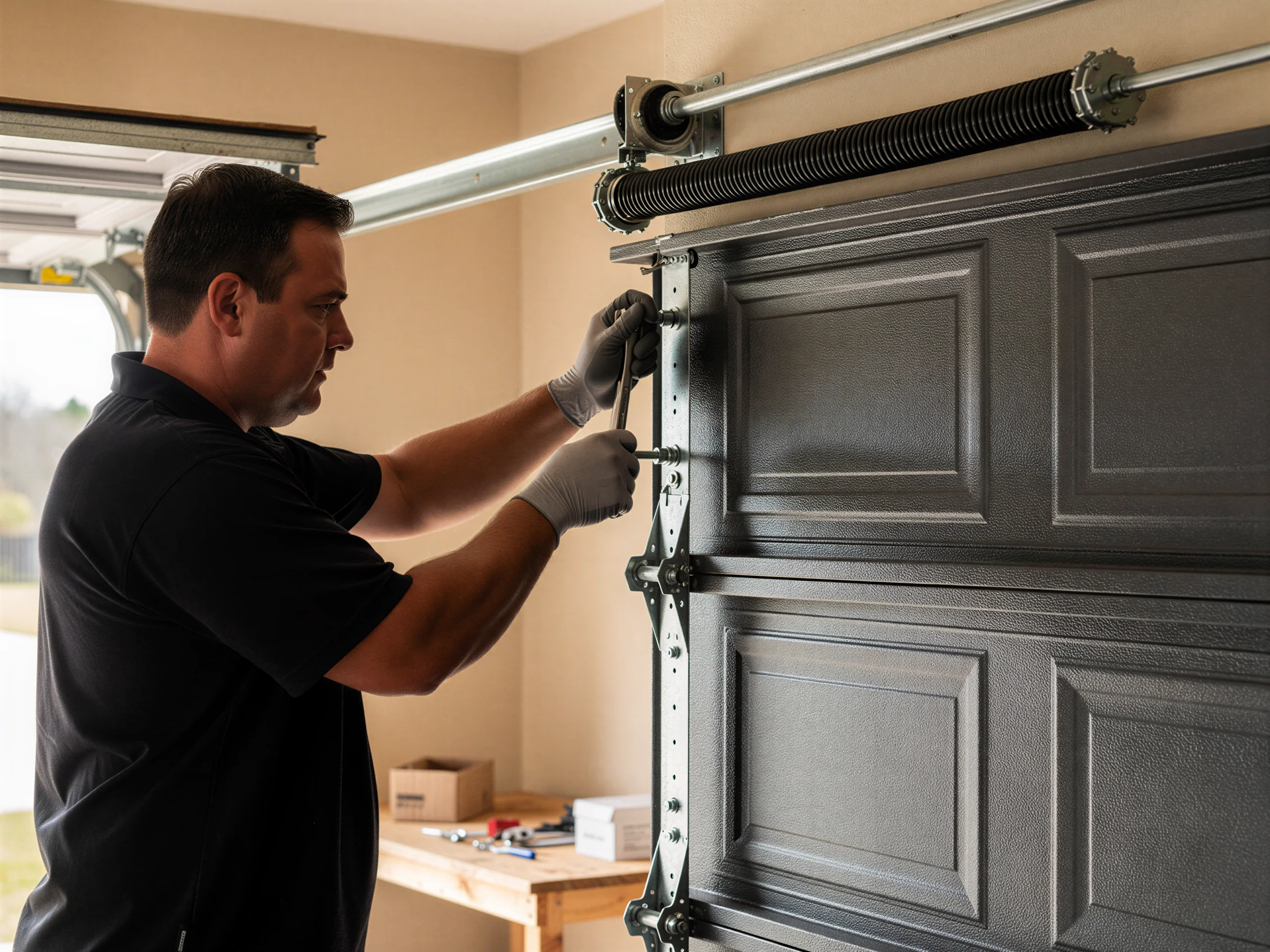
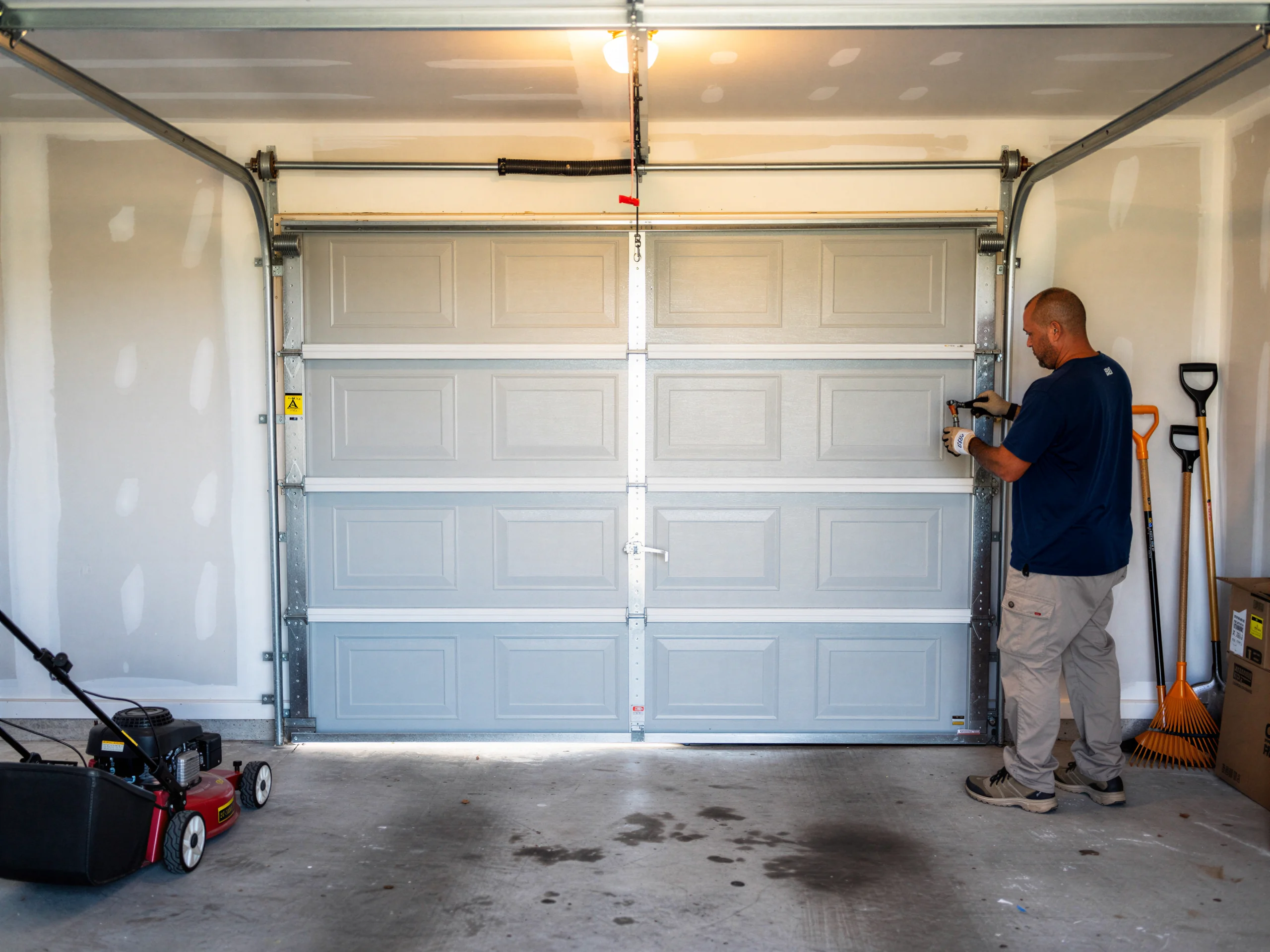
A single panel swap on a sectional door usually means removing the door from the track enough to slide the damaged section out, which means disconnecting the spring tension first - this isn't a job to do with the door loaded.
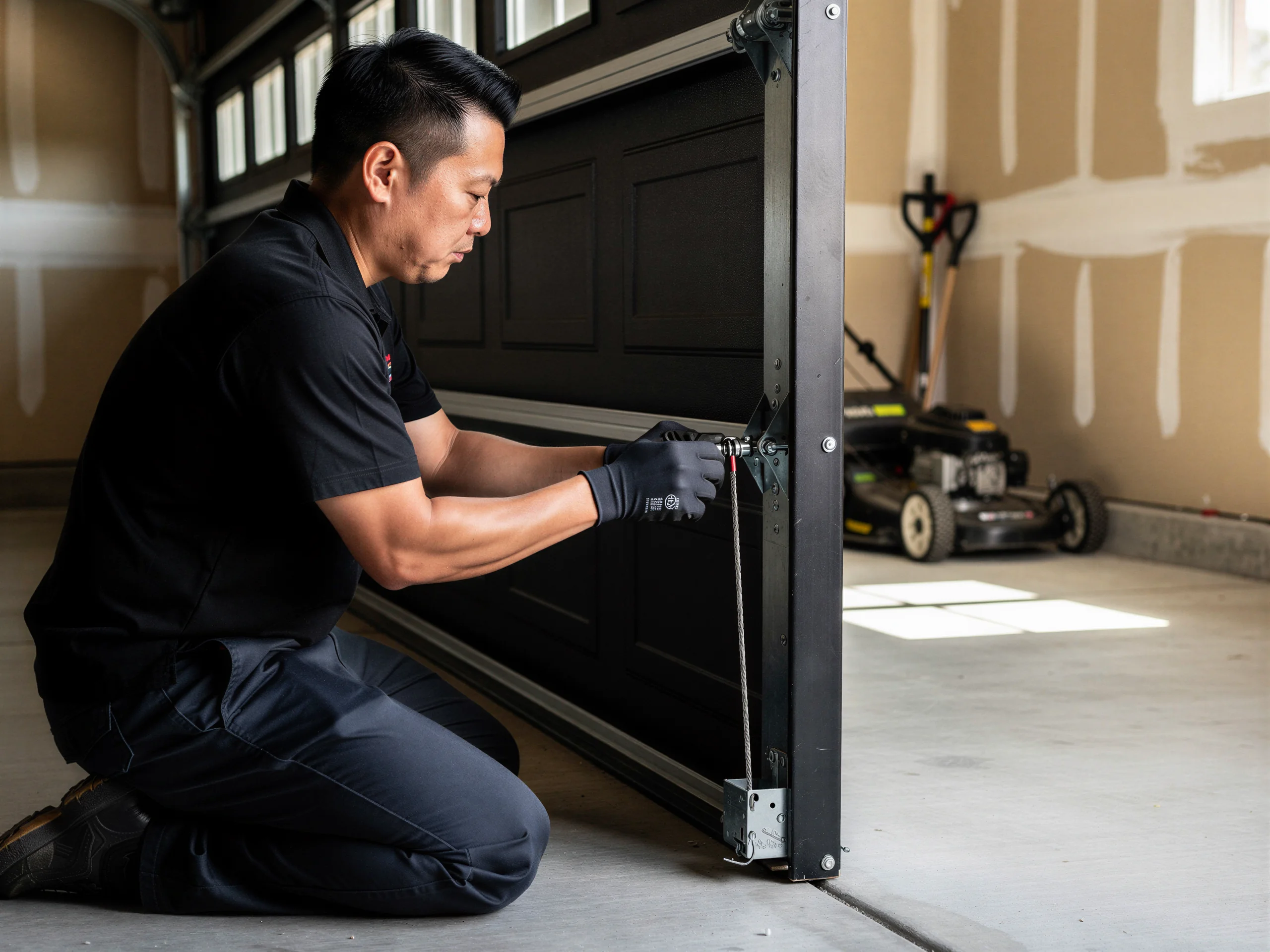
If the hinges or rollers at that section are also worn, we replace those at the same time since reusing bent hardware on a new panel just transfers the stress to the next section down.
The honest limitation: if the door is old enough that the manufacturer no longer makes that exact panel profile, we're sourcing a close match, not an identical one, and sometimes that means replacing two adjacent panels so the seams line up instead of one odd section standing out.
We'll tell you that before we order anything, not after. For doors where three or more panels are compromised, replacing the whole door is usually cheaper than chasing individual sections, and we'll say so rather than billing panel by panel.
Questions
Usually, yes - sectional doors are built in individual panels, so a damaged one can often be swapped on its own. The limit is availability: if your door is old enough that the exact profile isn't made anymore, we may need to replace an adjacent panel too so the seams match.
Foam-core steel panels seal moisture out at the factory, but once that seal fails - usually at a dent or seam - cold, damp air gets behind the steel and can't dry out between storms. The rust starts on the inside and isn't visible until it's eaten through.
Close, but not exact, on an older door. Paint fades and profiles change over the decades, so a new section will likely look slightly different until it weathers in. If a seamless match matters to you, full door replacement is worth considering instead.
Explore more
Ready when you are
Shoreline Garage Door Pros repairs and installs garage doors, springs and openers in Shoreline, WA and the surrounding area.