
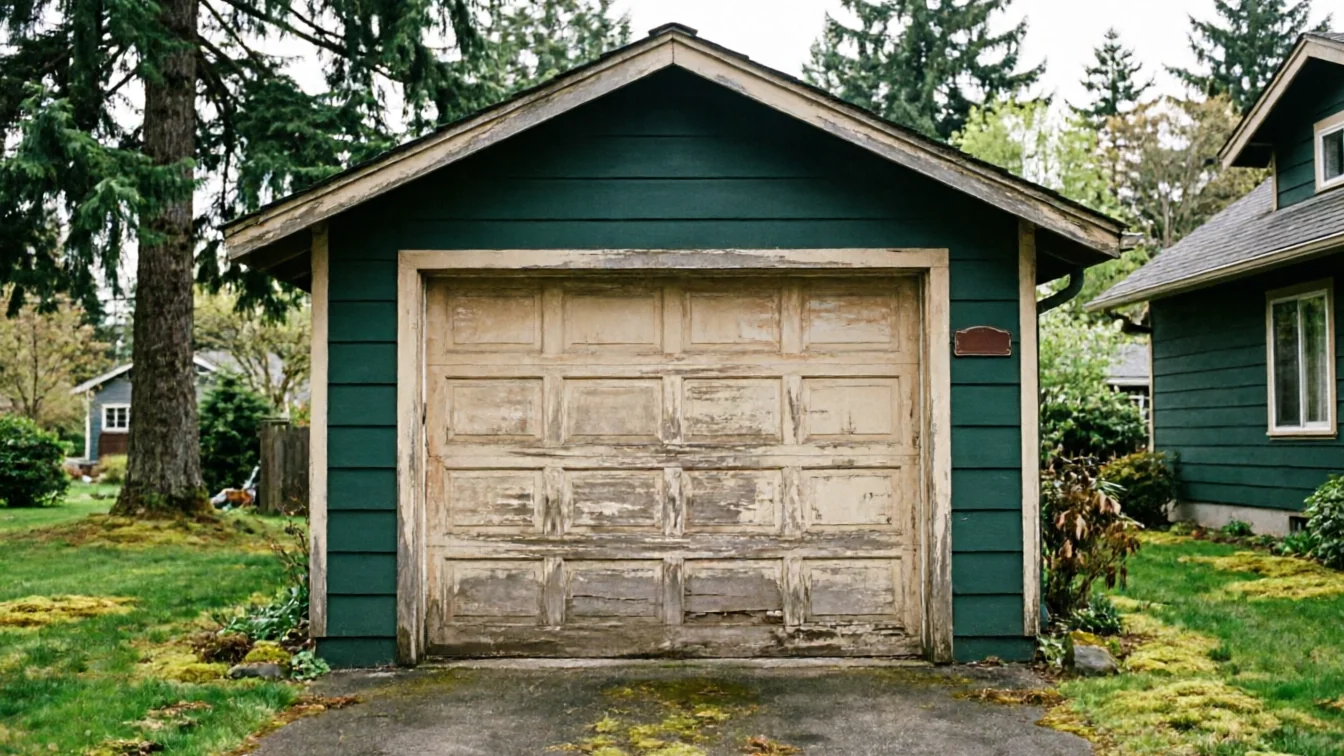
Is Your Shoreline Garage Door Worth Fixing, or Done
Shoreline homes built mostly between 1965 and 2001 carry original hardware past its service life.
Read moreShoreline homes built mostly 1965-2001 carry original torsion hardware. See why doors go off track in this cold, wet climate and what a tech checks first.
Local detail
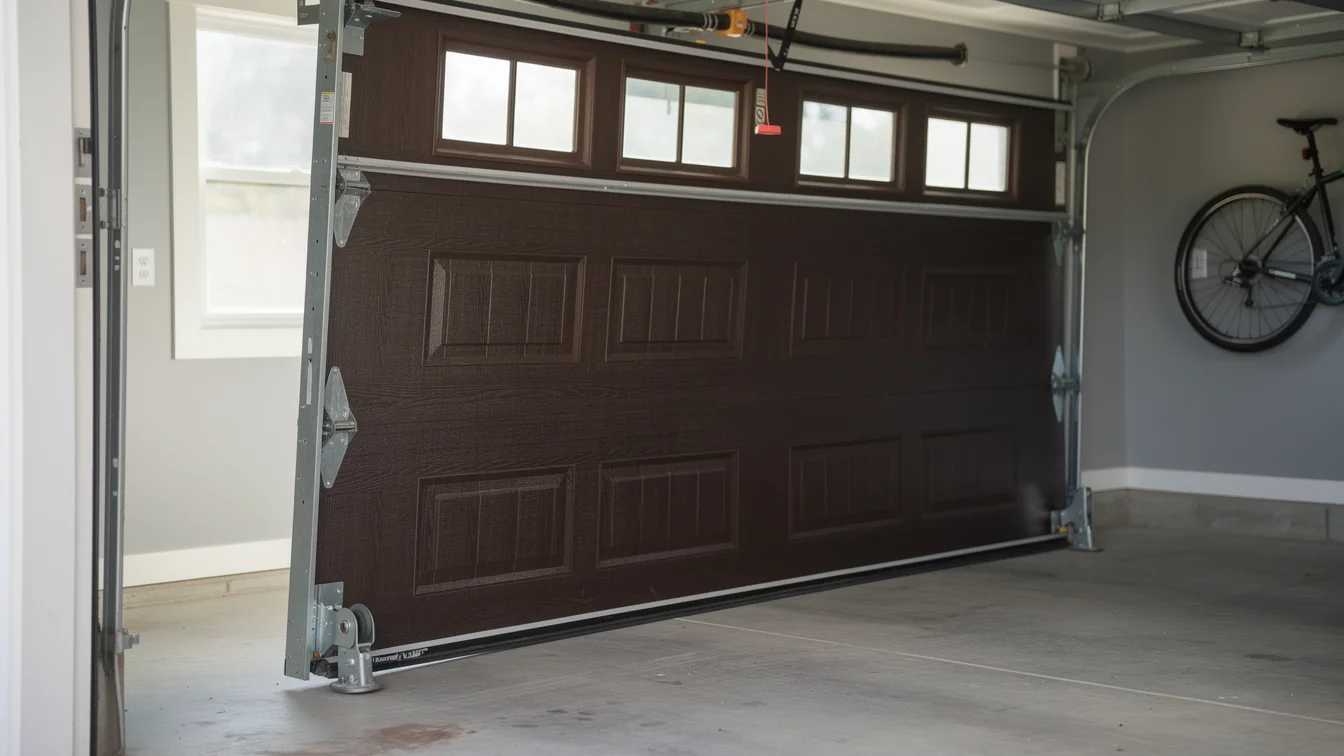
Start at the track, not the opener. Most houses in this part of Shoreline went up between 1965 and 1985, which put galvanized steel tracks on wood door jambs that have had four decades to settle, shift, and in some cases rot slightly at the base. Stand inside the garage with the door down and look along both vertical tracks from the floor up. A track that bows inward or outward more than about a quarter inch over its length is doing more work than it should.
Next, check the rollers at eye level. On a door this age, original rollers are often the small nylon or steel type that were standard through the 80s and 90s - they wear a flat spot over the years and start riding the edge of the track instead of the center. Run a hand along the horizontal track near the back of the garage too; that's where sag shows up first on long runs.
Last, look at the brackets holding the track to the jamb. Lag bolts back out of old studs over time, especially where the wood has taken on moisture. If you can wiggle a bracket by hand, that's your answer - the track isn't out of alignment on its own, something holding it is loose.
The area
This area sits in a cold, moderate climate band - not the brutal freeze-thaw of the Midwest, but steady damp cold that never fully dries out the wood framing around a garage opening. That matters more than people think. Jamb studs swell slightly through the wet months and give back a little in summer, and every cycle works the lag screws holding your track brackets a few degrees looser.
Over a house built in the 1965-2001 range, that's thirty-plus winters of swelling and contracting. The track itself doesn't move much - steel doesn't care about moisture the way wood does - but its attachment points do, and a track bolted to a jamb that's shifted even slightly out of plumb will bind a roller on every pass.
Condensation is the other piece. A garage that isn't heated or vented well holds moisture on steel track longer than the wood framing around it, which speeds up surface rust at the mounting holes - another reason brackets loosen rather than staying tight. None of this is dramatic. It's slow, and it's exactly the kind of wear that shows up as a door that rattles off track rather than one that fails all at once.
What we find
A door off track almost never fails for one clean reason - it's usually the housing-stock pattern plus the climate pattern landing on the same hardware at the same time. With 103,888 owner-occupied houses across this service area, and most of them still running the hardware they shipped with in the 1980s and 90s, worn rollers riding against a track that's drifted slightly out of plumb is the single most common thing we find.
Here's the mechanical part: a roller that's flat on one side doesn't track straight. It pulls to whichever side has more wear, and once it starts pulling, it rides the lip of the track instead of the channel. Add a bracket that's loosened from decades of seasonal wood movement, and the track has just enough play to let the roller pop the lip entirely - that's the bang and stop you hear partway through a cycle.
Within a few miles of Shoreline - Lake Forest Park, Mountlake Terrace, Edmonds - the housing stock runs the same 1965-2001 range, so this exact failure pattern repeats block to block rather than being a one-off. A door that's walked off track on a house built before 1985 usually means the track itself has bent slightly, not just a loose bolt, and that's worth knowing before anyone reaches for a wrench.
How we work
Tightening a loose bracket or swapping a worn roller is reasonable weekend work if the door is still on its track and moving under its own spring tension safely. The moment the door has actually jumped the track - panel hanging at an angle, cable visibly slack - stop. That door is being held by partial tension on a spring system that can let go fast, and that's not a DIY repair regardless of how simple the fix looks.
Here's the honest limitation: we don't always recommend fixing the track. If the bend is more than minor, or if this is the second time the same section has come loose from the jamb, patching it again is just buying a few more months. On houses in the 1965-2001 range, track and jamb wear this far along is usually a sign the whole assembly - track, rollers, and sometimes the bracket hardware itself - is due, not just the one section that failed today. We'll tell you that straight rather than charge you twice for the same problem a year apart.
Questions
If the door has fully come off the track, no. At that point the door is held by uneven spring tension and can drop or swing without warning. Leave it where it is and call - this is a case where a quick fix attempt can turn a repair into an injury.
Usually it's the bracket on that side, not the roller. In houses from the 1965-2001 era, one side of the jamb often took more moisture over the years than the other, which loosens the lag screws unevenly and lets that track drift first.
A short, shallow bend near the bottom roller can sometimes be straightened. A bend higher up the track, or a track that's come loose from the jamb more than once, is usually cheaper to replace than to keep adjusting.
Recommendation
More garage door guides for Shoreline homeowners.
Shoreline homes built mostly between 1965 and 2001 carry original hardware past its service life.
Read more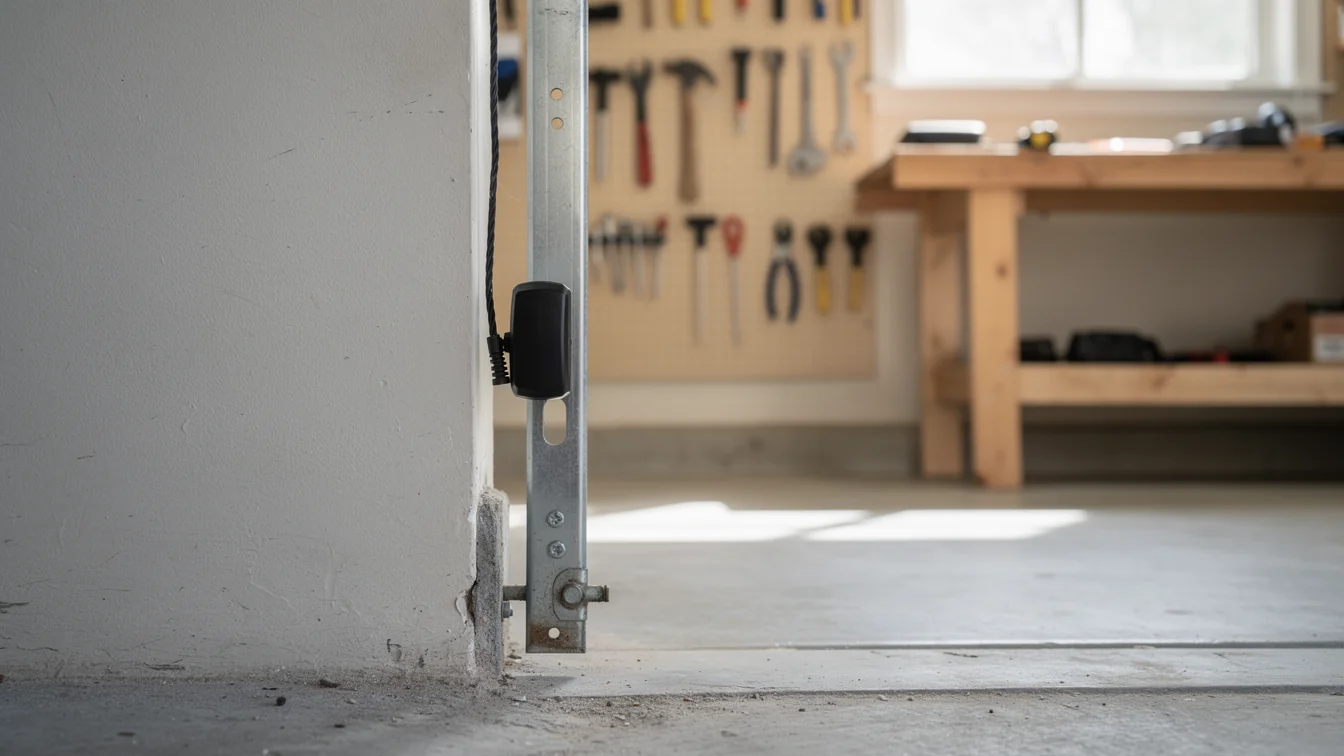
Shoreline homes built mostly 1965-2001 still run original sensor brackets.
Read more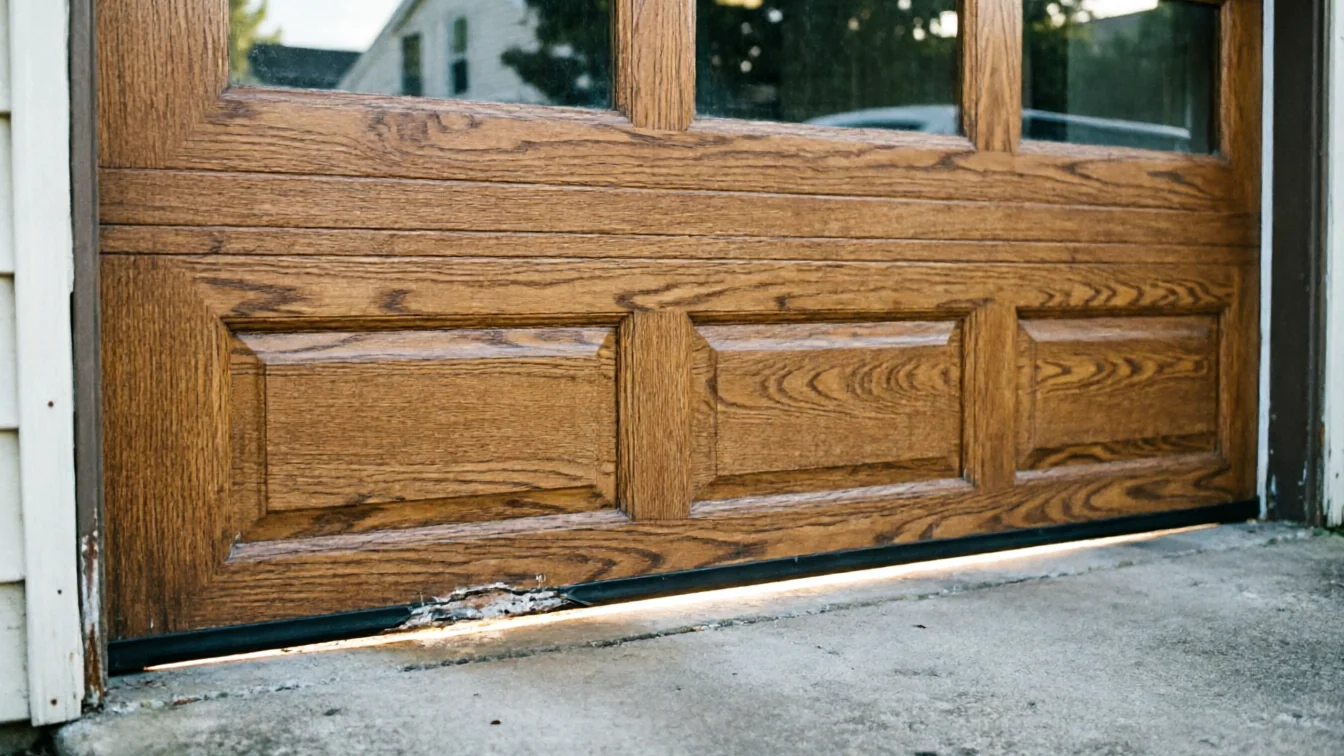
Shoreline's 1965-2001 housing stock means original seals rarely survive our cold, wet winters.
Read moreReady when you are
Shoreline Garage Door Pros repairs and installs garage doors, springs and openers in Shoreline, WA and the surrounding area.