Silent spring failure
Rust on a torsion spring doesn't just look bad - it changes how the coil flexes under load and can cause it to fail without the warning signs a newer spring would show.
Burien, Shoreline
Burien's housing dates to 1965, a decade older than the wider service area median. We cover the original springs, tracks and openers from that era, traveling 19 miles out of Shoreline.
Watch-outs
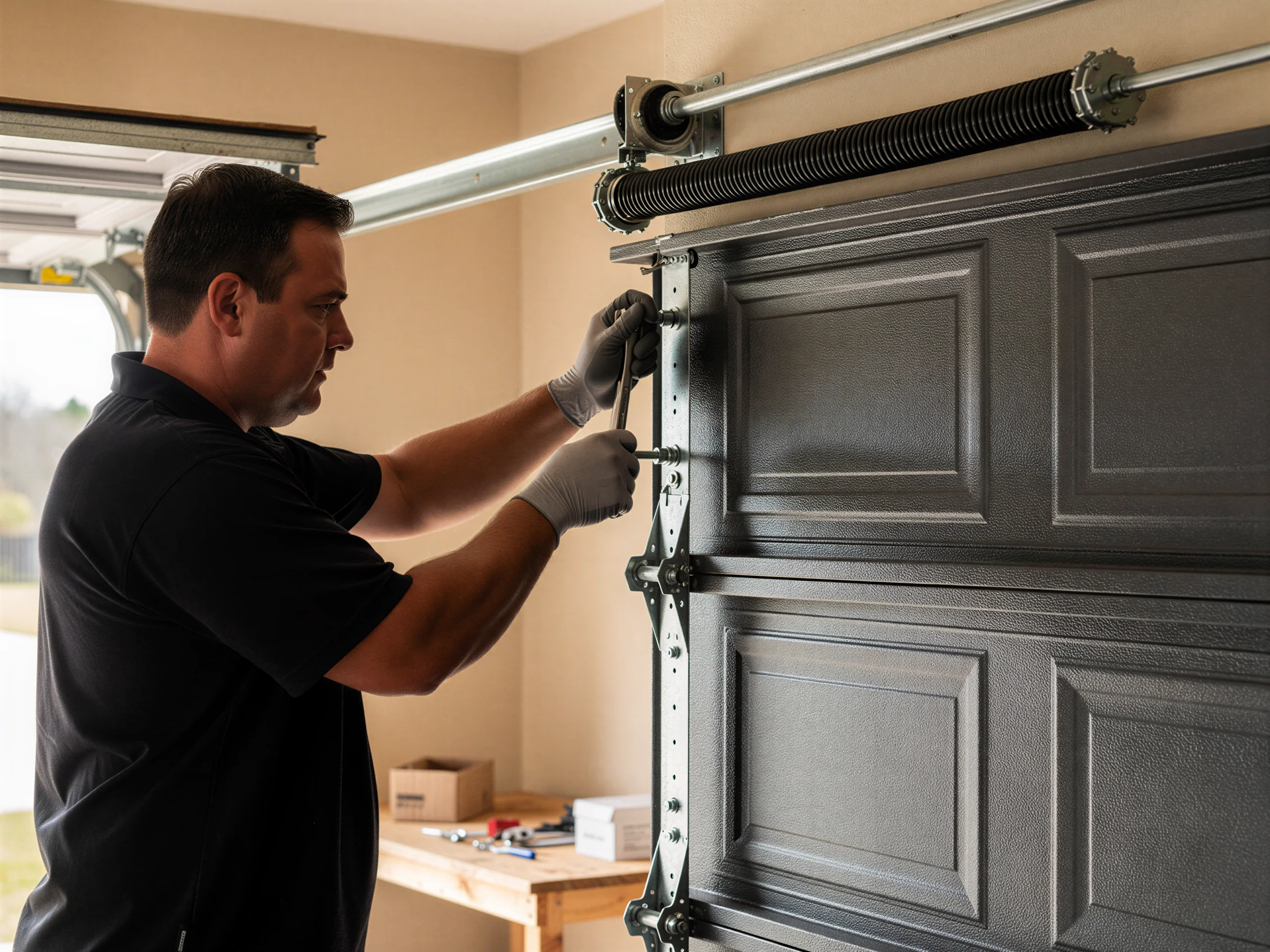
The thing that turns a one-hour repair into a longer one on Burien's older stock is finding out the track or the drum has already been bent or swapped at some point without matching the rest of the hardware. We've opened up doors where a previous repair put a modern spring on an old drum, or a new cable on an old pulley, and the mismatch is why the door's been binding. On a house with original 1965 parts throughout, at least everything is consistent - it's the mixed systems that take longer to sort out safely.
Local causes
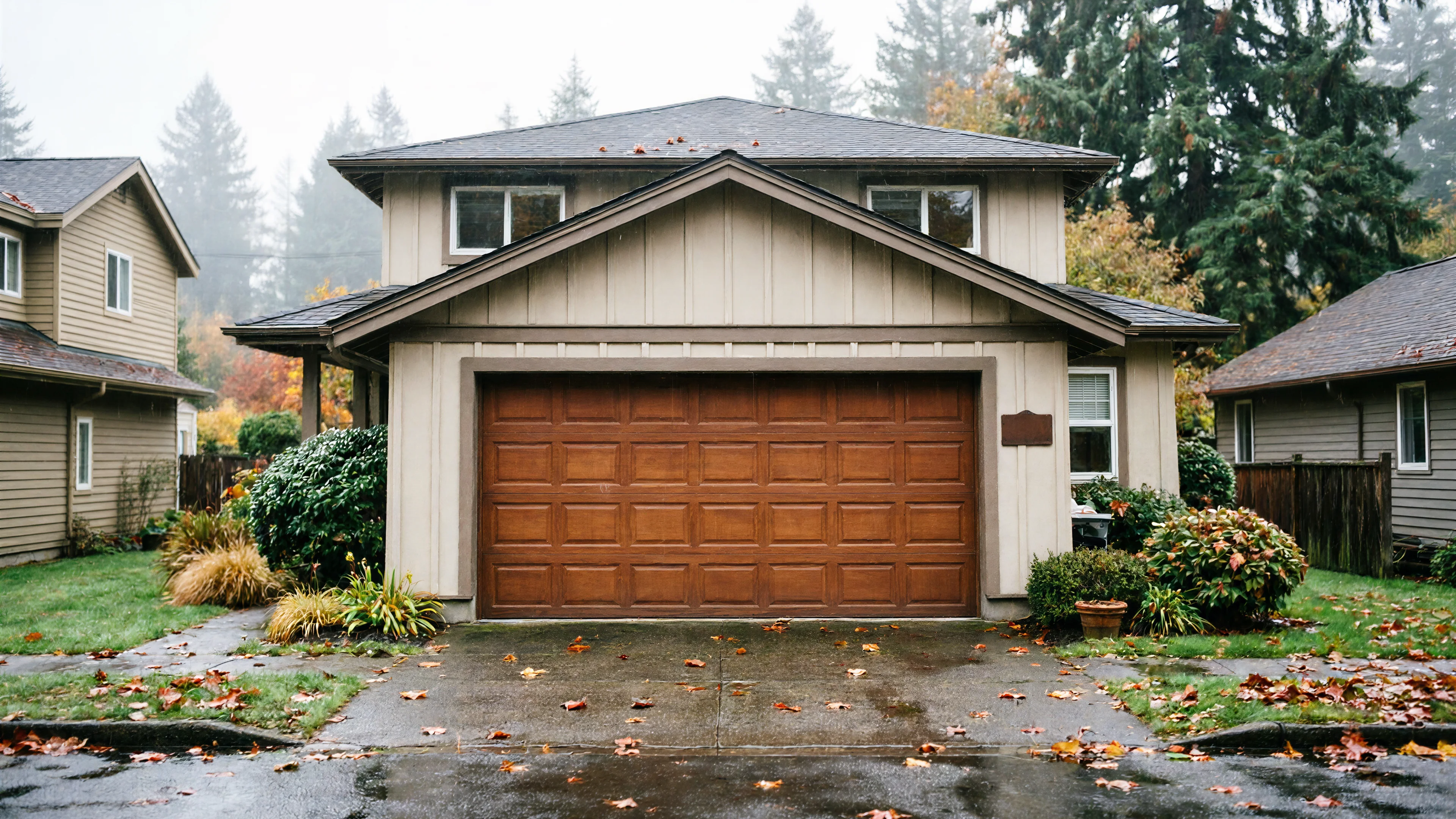
The region sits in a cold-moderate climate band, and on a door with original steel hardware from 1965, decades of damp winters have had a lot more time to work on unprotected fasteners and springs than they have on a door installed in the 1980s or 90s.
Rust on a torsion spring doesn't just look bad - it changes how the coil flexes under load and can cause it to fail without the warning signs a newer spring would show.
Combine original hardware with sixty years of wet winters and you get failures that show up suddenly on doors that seemed fine the week before.
The repair
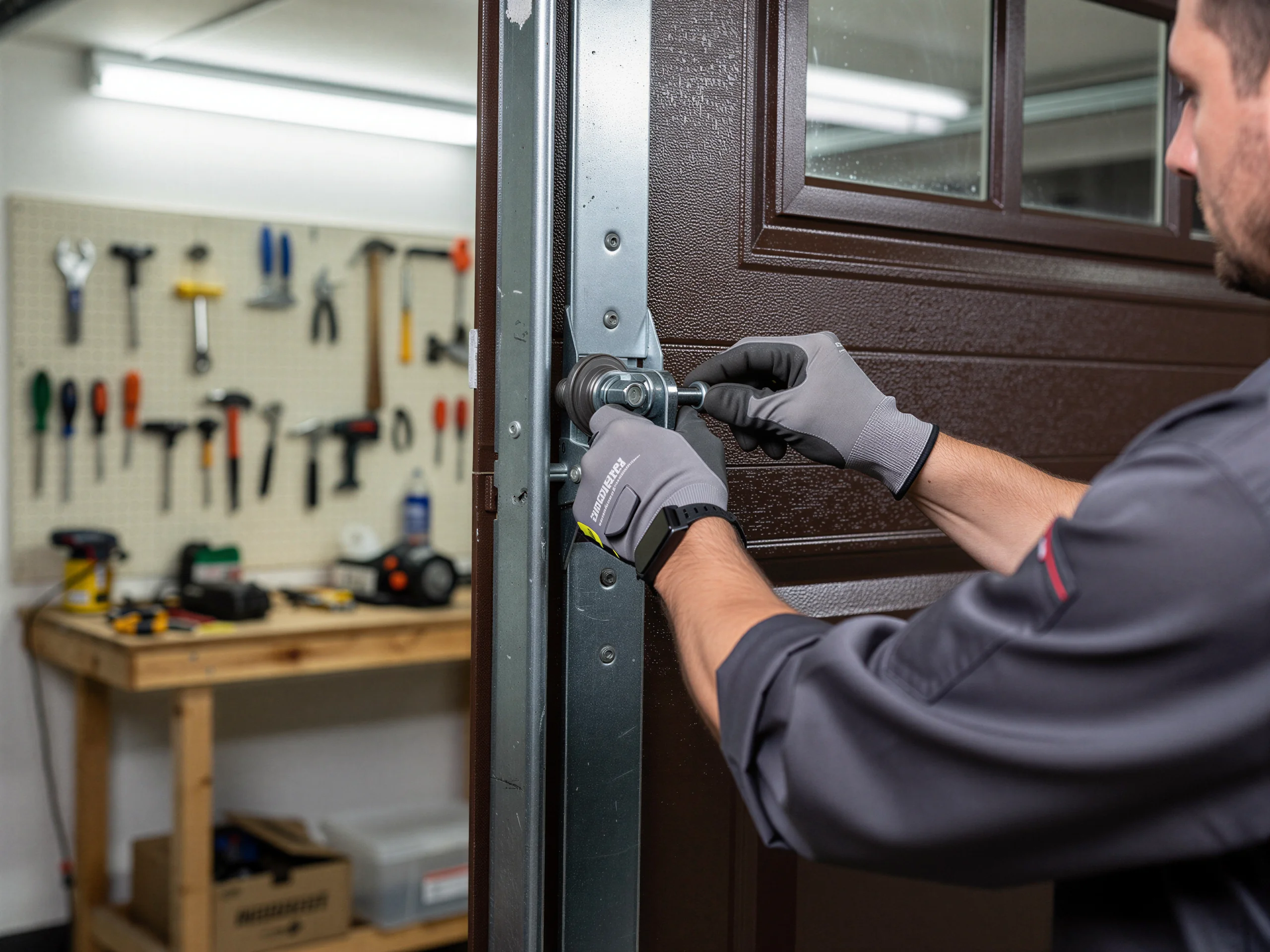
Most repairs on Burien's older doors start with matching what's there now rather than assuming a standard modern part will bolt straight on. We bring spring and hardware options sized for both the original 1965-era setups and anything that's been upgraded over the years. One limitation worth saying plainly: if the hardware on your door is a mix of eras and sizes, we may need to order a part that isn't on the truck, which can add a day. We'd rather tell you that up front than force a part that doesn't fit. We travel to Burien from Shoreline, about 19 miles, to handle jobs like this.
Warning signs
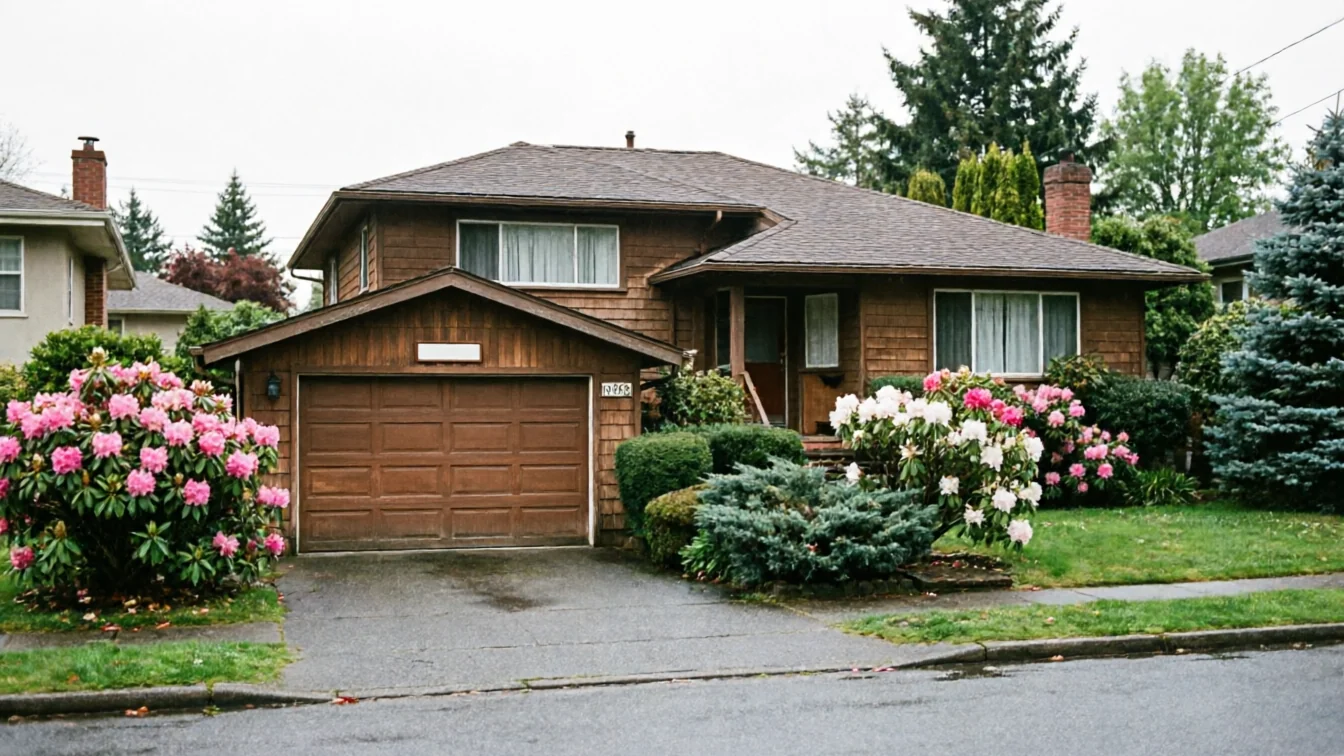
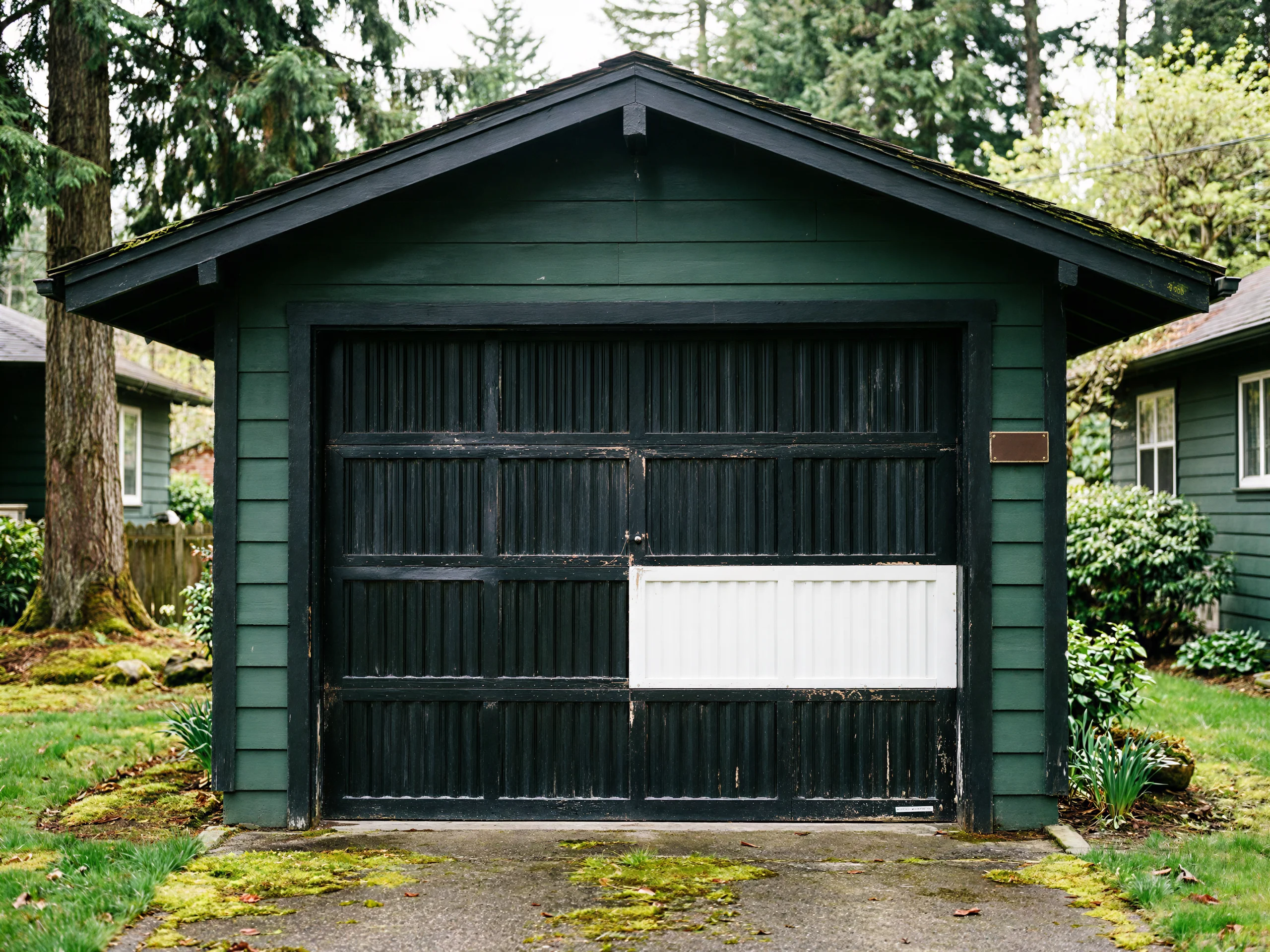
Burien's median home dates to 1965, which puts a good share of its garage doors a full twenty years ahead of the 1985 median we see across the rest of the service area.
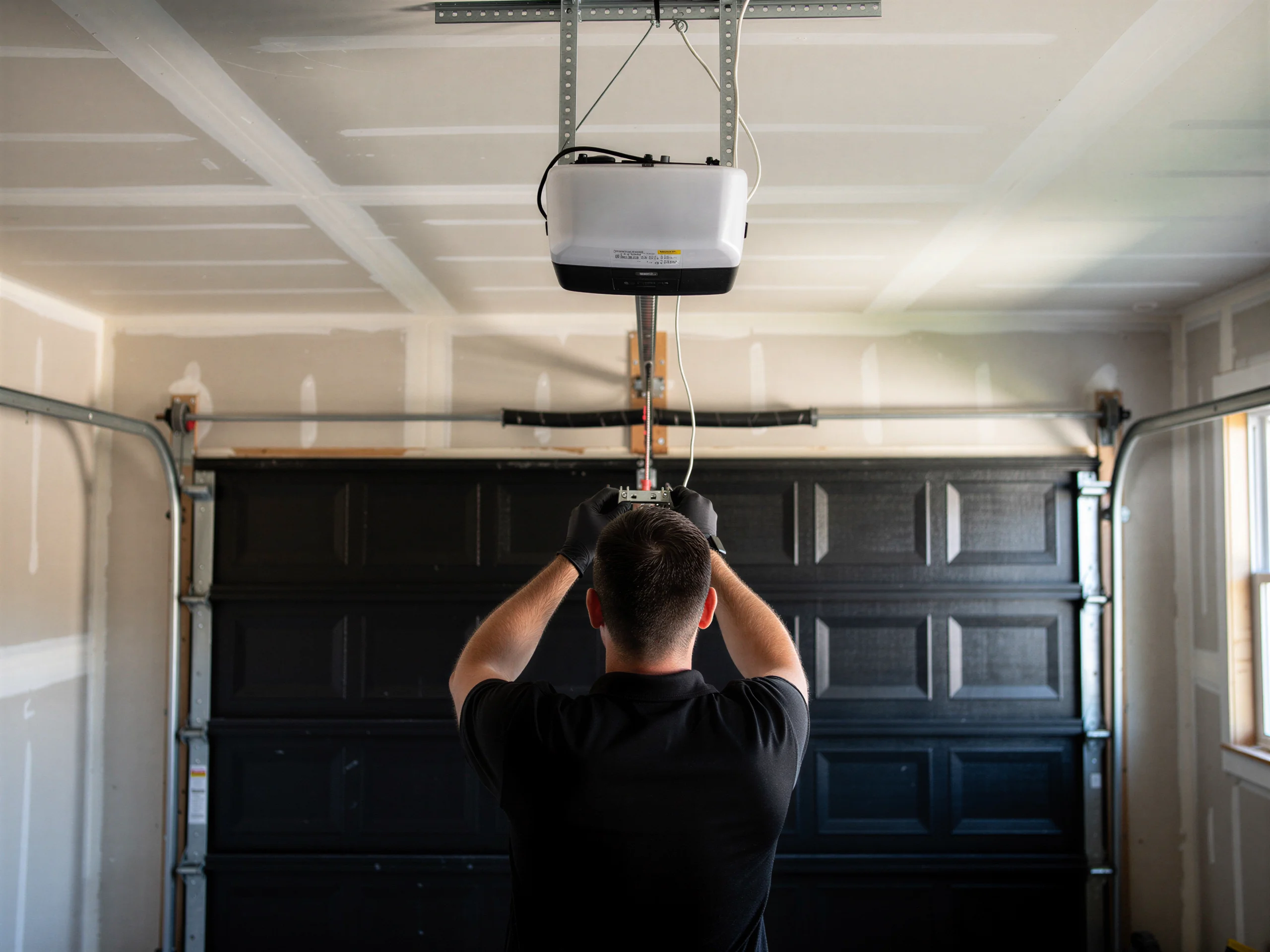
That gap matters because a door installed in 1965 was built before torsion spring assemblies were standardized the way they are now, and before openers had any kind of auto-reverse safety sensor. If your house hasn't had the garage door touched since it was built, the spring, the cable drums, and very likely the track hangers are all original equipment.
We see this pattern again and again on calls from this side of the service area: a door that's run fine for decades right up until the one part nobody thought to check finally lets go. The failure usually isn't dramatic.
It's a spring that's lost tension gradually, a cable starting to fray at the drum, or an opener that still works but has no modern safety reversal at all. None of that announces itself until the door won't lift, or lifts crooked, or comes down on something it shouldn't.
DIY or pro
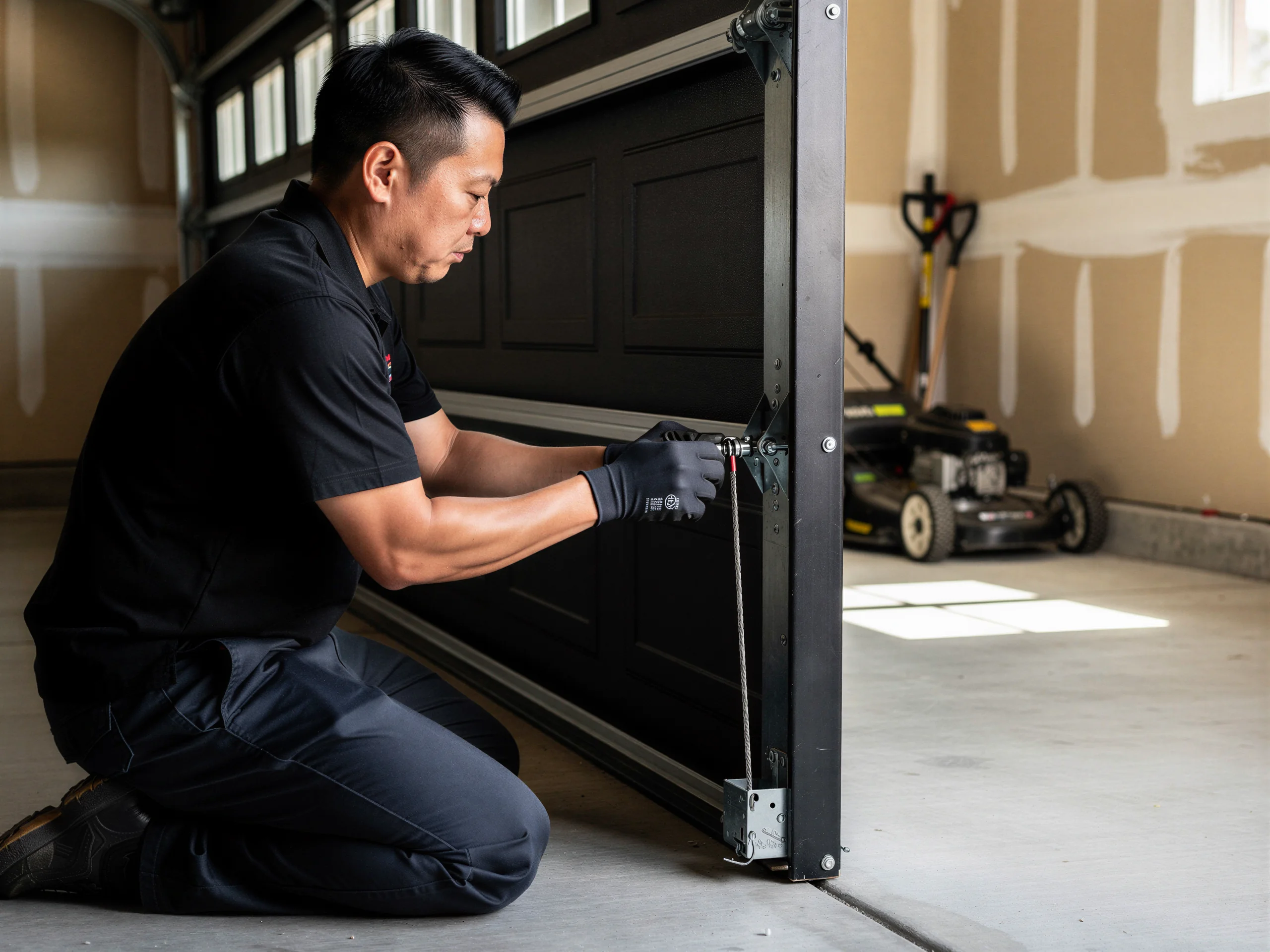
A torsion spring holds a lot of stored force, and on a door this age you're also dealing with hardware that may not match anything sold today. Replacing a 1965-vintage spring with a current off-the-shelf part sometimes means swapping brackets too, not just the spring itself. That's not a YouTube-on-a-Saturday job - a spring under tension that slips off a winding bar can break a wrist or worse.
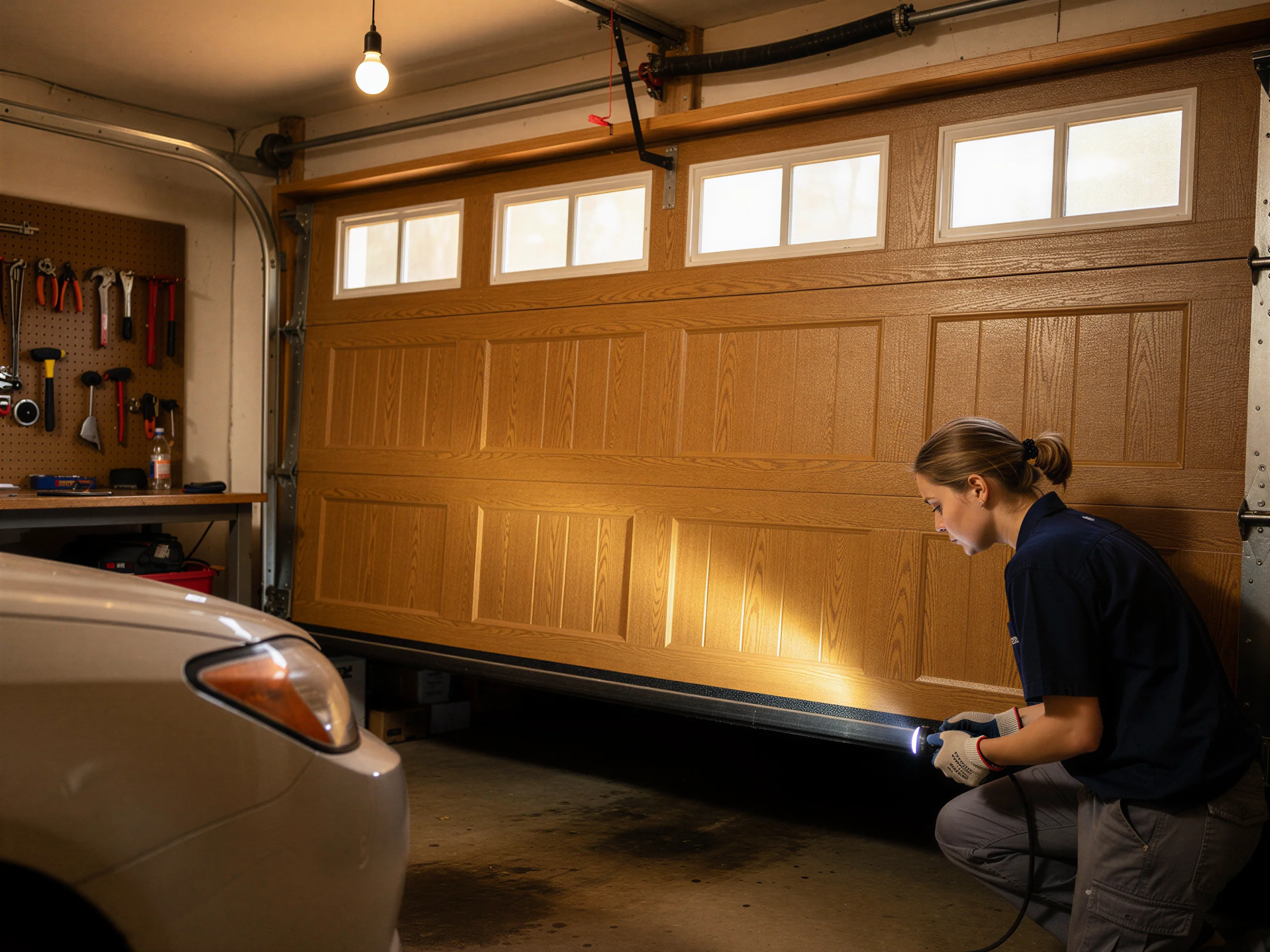
There's plenty you can do yourself short of that: lubricate the rollers and hinges, tighten loose hardware, test the auto-reverse by placing a 2x4 under the door's path. If the door is noisy but still moves correctly, start there. If it's a spring, a cable, or anything holding the door up under tension, that's a call, not a project.
Job timing
A straightforward spring replacement on original 1965 hardware usually runs shorter than a job where we also have to track down a non-standard bracket or adapt a drum to current cable sizing.
We can't promise a number until we've seen what's actually on the door, because original equipment from this era isn't always consistent even house to house.
What we can tell you is that most of the delay on these older jobs isn't the labor - it's figuring out exactly what's been modified or patched over the decades before we touch anything.
Questions
It's possible, especially if no one has mentioned replacing the spring or opener. Burien's median home dates to 1965, two decades ahead of the median for the broader service area, so original torsion springs and non-safety openers are more common here than in newer pockets nearby.
Original springs from the 1960s weren't built with the coatings common today, and in a cold-moderate climate, decades of damp winters corrode the coil from the inside. Rust changes how the spring flexes, so it can snap suddenly instead of gradually losing tension the way a newer spring would.
No, we work out of Shoreline and travel to Burien, about 19 miles away, for service calls.
Sometimes, but not always. Original 1965-era brackets and drums don't always match current standard parts, so we check what's actually on the door before assuming a stock spring will fit.
Explore more
Ready when you are
Shoreline Garage Door Pros repairs and installs garage doors, springs and openers in Shoreline, WA and the surrounding area.