
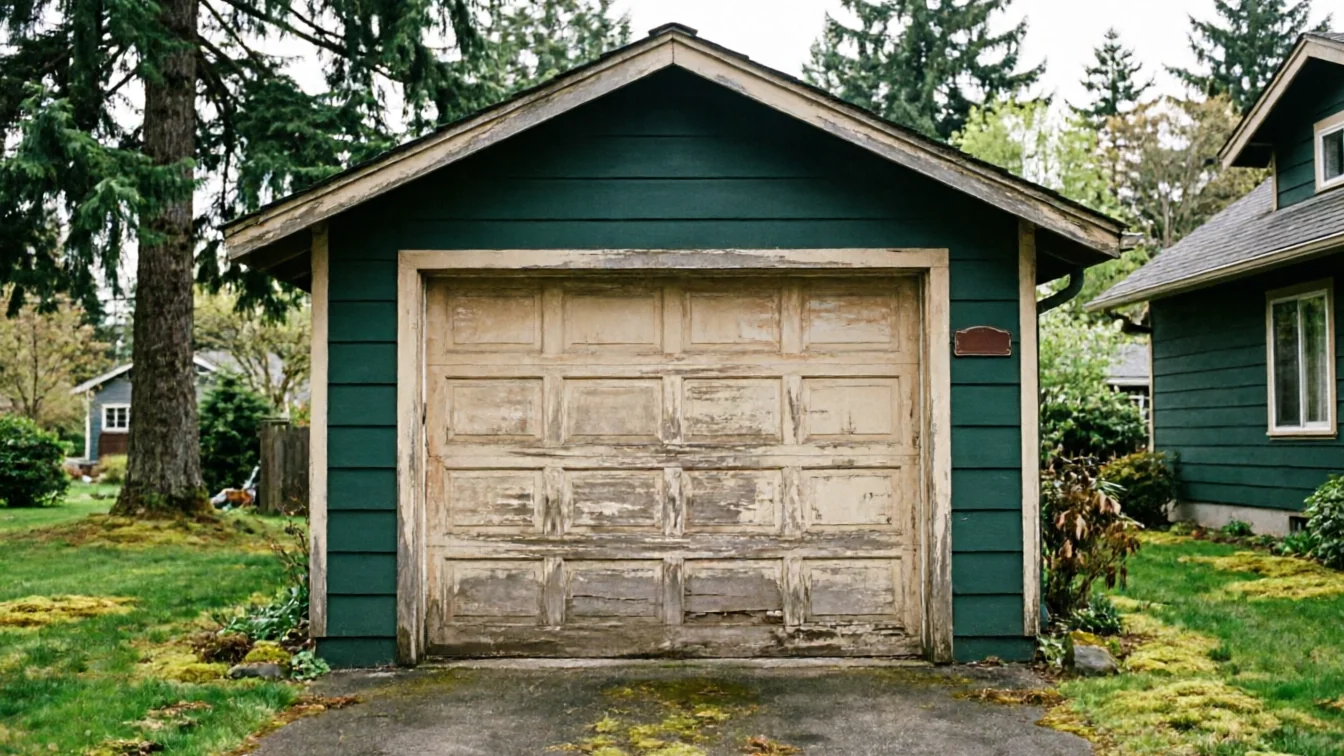
Is Your Shoreline Garage Door Worth Fixing, or Done
Shoreline homes built mostly between 1965 and 2001 carry original hardware past its service life.
Read moreShoreline homes built mostly 1965-2001 still run original sensor brackets. Here's why they drift in this climate and when it's past a DIY fix.
Local detail
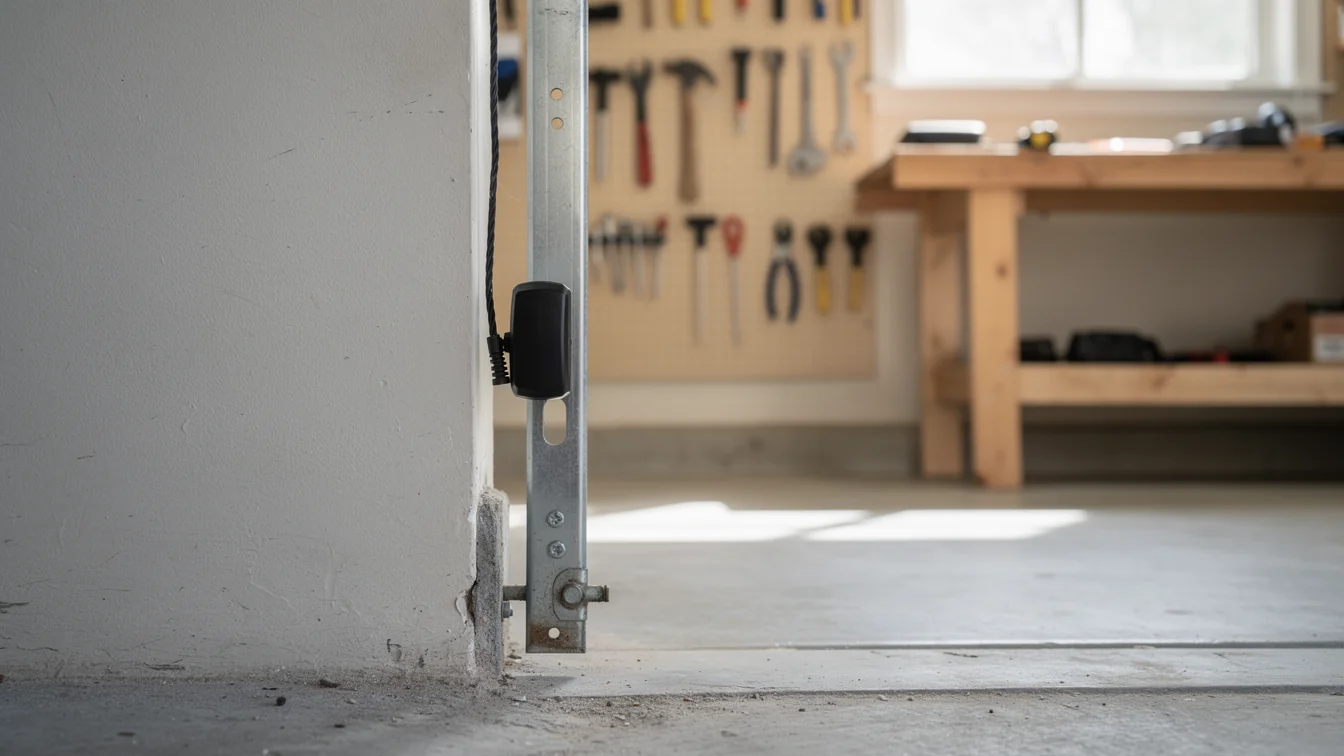
Start at the brackets, not the eyes. On a lot of Shoreline garages, the metal brackets holding the safety sensors are the same ones that went in when the house was built, and most of this housing stock dates to 1965-2001, with a heavy concentration in the 1980s and early 90s. Steel that old has usually taken a few hits from bikes, mowers, and snow shovels over the decades, and even a small bend changes the angle of the beam.
Check whether the sensor is still square to its mate across the opening, not just whether the LED is lit. A lit LED only tells you power is reaching the unit, not that the beam is true. Also look at the mounting screws - on original brackets from this era they're often just sunk into bare wood or a painted stud, and that wood moves more than people expect over forty-plus years.
If the house still has its original opener from that same build window, the sensor wiring may be original too. Frayed or brittle insulation near the bracket is common once wiring gets into that age range, and it's worth a look before you assume the sensor itself is bad.
The area
Shoreline sits in a cold, moderate climate band, and that matters more to a garage slab than most owners think. The concrete under a garage door track goes through a freeze-thaw cycle most winters, and even a slight amount of slab movement shifts whatever is bolted above it - including the sensor brackets mounted to the track or the wall studs near the floor.
That movement is small, a degree or two at a time, which is exactly why it reads as mysterious. The door worked fine in September and started reversing for no reason in January. It's not usually the sensor failing outright; it's the beam path shifting a fraction of an inch at the far end of a 16-foot run, which is enough to break the connection intermittently rather than all the time.
Houses built across the 1965-2001 stretch that makes up most of this area went up before anyone was thinking about seasonal slab movement affecting garage electronics, so the brackets were never designed with that shift in mind. It's a slow problem, not a sudden one, and that's why it tends to show up as random, weather-linked glitches instead of a clean failure.
What we find
Once a bracket is off true, the two sensors are no longer looking straight at each other. The opener doesn't know the beam is misaligned - it only knows whether it's receiving a clear signal. When the signal cuts out, even for a fraction of a second, the opener treats it as an obstruction and reverses the door or refuses to close at all.
This is why the symptom is so often described as intermittent: the door closes fine most days, then won't close at all on a cold morning, or reverses halfway down after a frost. The drift is also cumulative. A bracket that's moved slightly this winter was already moved slightly last winter, and the next freeze-thaw cycle adds a bit more. Eventually the beam clears the receiver by millimeters instead of inches, and anything - dust, a cobweb, a change in sunlight angle through the garage door window - pushes it over the edge.
Across the 41 communities this crew covers, from Lake Forest Park down to Edmonds, the same 1980s-vintage garage stock shows this identical pattern. It's not a one-house issue; it's what happens to original brackets left in place for decades in this climate.
How we work
Loosening the wing nuts and nudging a sensor back into line is a real DIY fix, and plenty of owners handle it themselves with a level and a flashlight. Where it stops being a weekend job is when the bracket itself is bent, rusted through, or the mounting point in the wood has gone soft - realigning a sensor bolted to a bracket that won't hold its position just buys you a few weeks before it drifts again.
It's also worth being honest that we don't rewire original 1980s-era opener circuits as a quick sensor call. If the wiring insulation is cracking at the bracket, that's an opener-level job, not a five-minute adjustment, and we'll tell you that rather than patch it.
With 103,888 owner-occupied houses in this service area and a large share built in that same 1965-2001 window, this is one of the most common calls we get, and most of the time it is a quick fix. But if your opener is original to a house from that era and the sensor issue is the second or third thing to go wrong with it this year, replacing the opener often costs less over time than chasing drift on hardware that's done its job for forty years.
Questions
Shoreline's cold, moderate climate puts the concrete slab under your garage through a freeze-thaw cycle each year, and that shifts anything bolted near it, including sensor brackets. The drift is usually only a degree or two, which is enough to break the beam intermittently without causing a total failure.
It's common. A lot of Shoreline's housing stock dates to 1965-2001, with plenty from the 1980s and early 90s, and many of those brackets have never been replaced. Original steel brackets from that era hold up, but decades of slab movement and minor impacts eventually take them out of true.
Often, yes - loosening the mounting screws and realigning the sensor with a level handles most cases. It becomes a bigger job if the bracket is bent, rusted, or the wood it's screwed into has softened, since realigning a bracket that won't hold position just delays the same problem.
If the opener is original to a house built in that 1965-2001 window and the sensors are the second or third issue this year, replacement often makes more sense than another repair. We'll say so plainly rather than keep patching hardware that's past its working life.
Recommendation
More garage door guides for Shoreline homeowners.
Shoreline homes built mostly between 1965 and 2001 carry original hardware past its service life.
Read more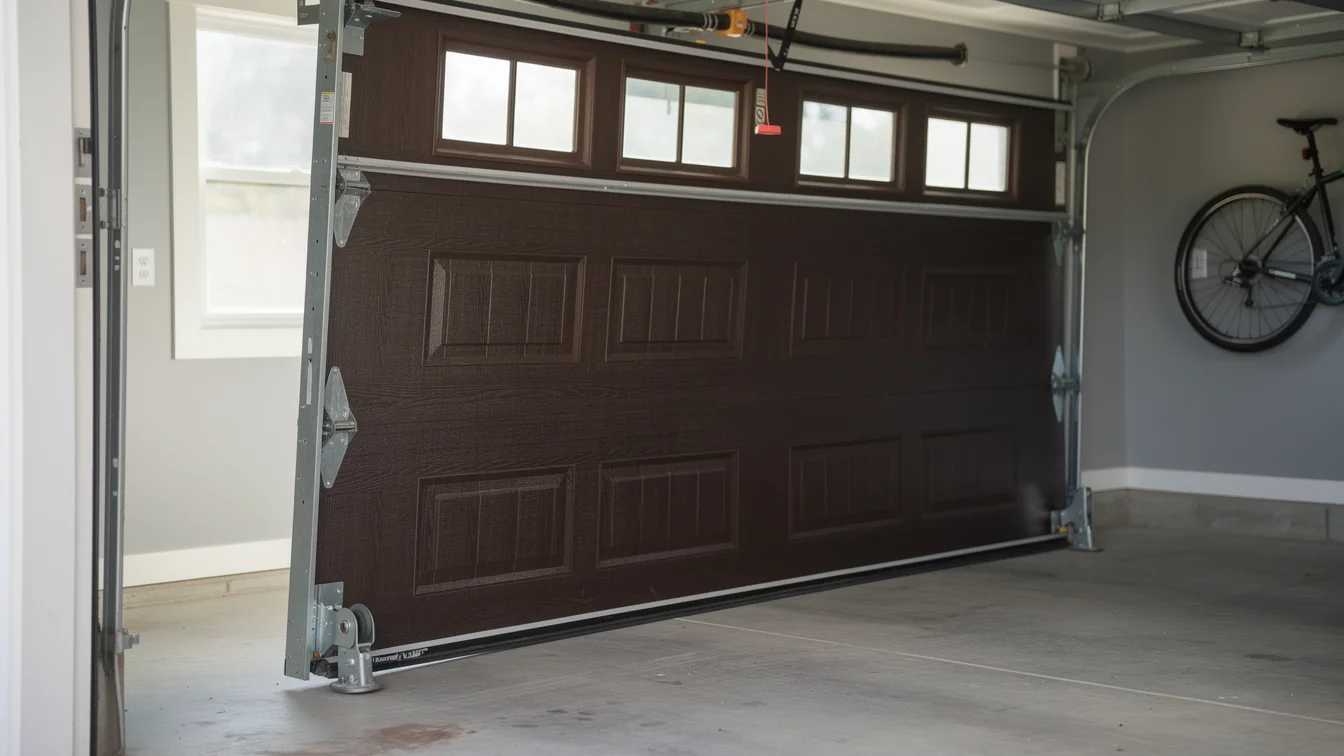
Shoreline homes built mostly 1965-2001 carry original torsion hardware.
Read more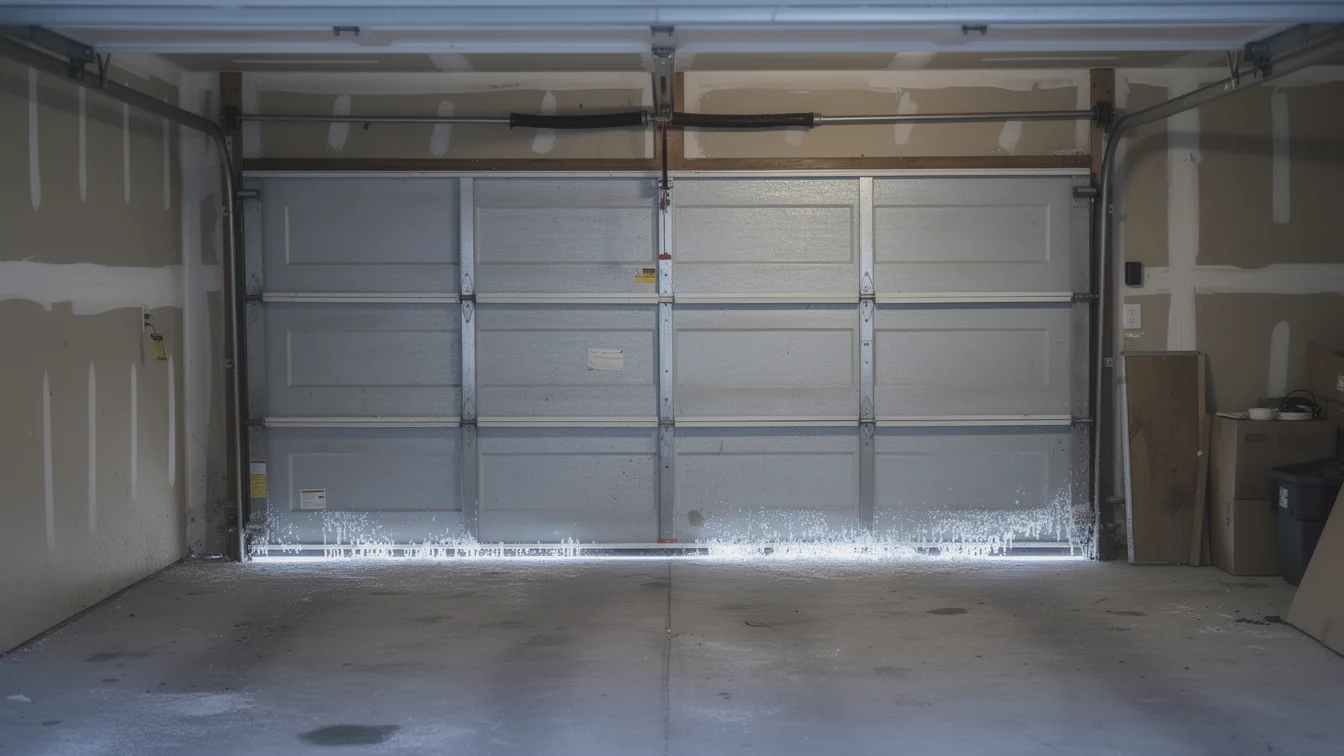
Shoreline homes built mostly in the 1980s and 90s came before modern insulation codes, which changes how garage doors fail here and what fixing one takes.
Read moreReady when you are
Shoreline Garage Door Pros repairs and installs garage doors, springs and openers in Shoreline, WA and the surrounding area.