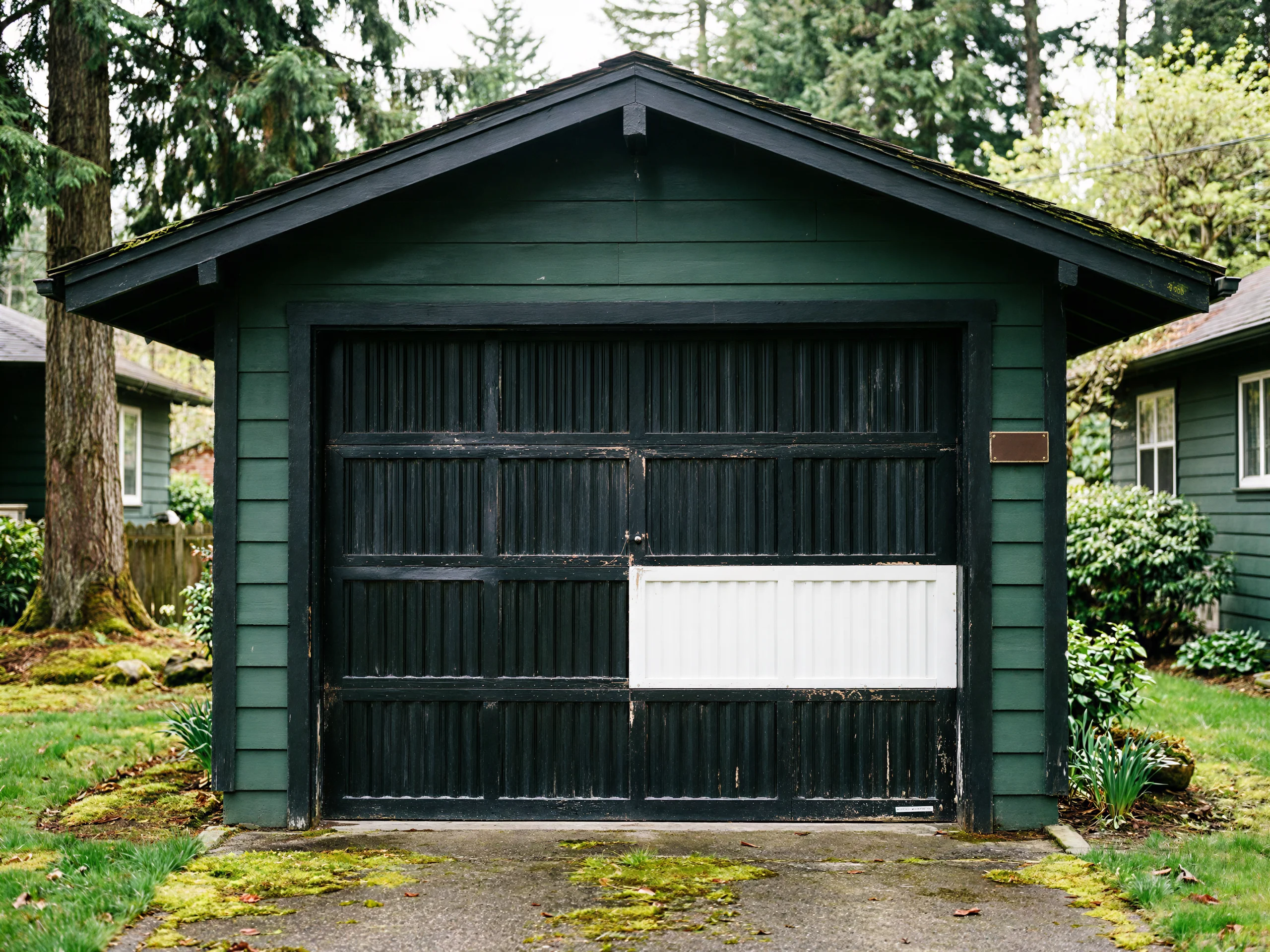
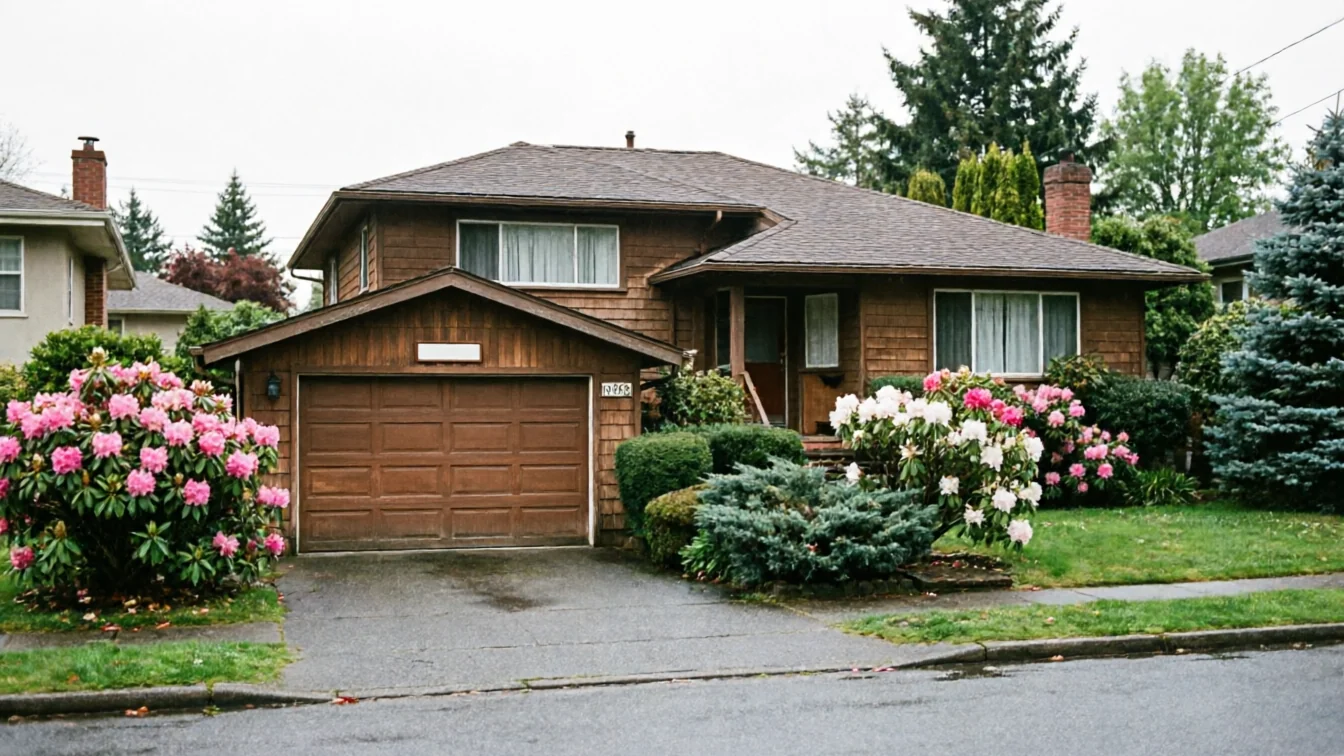
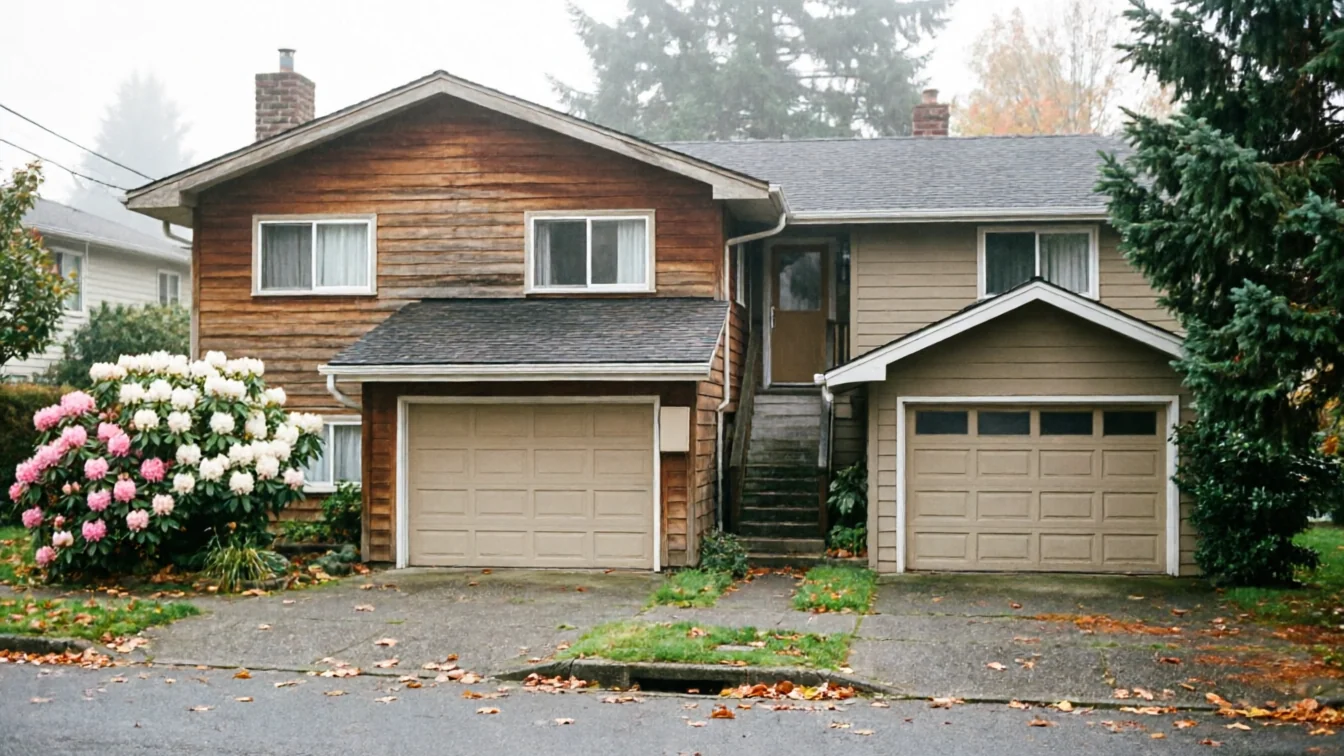
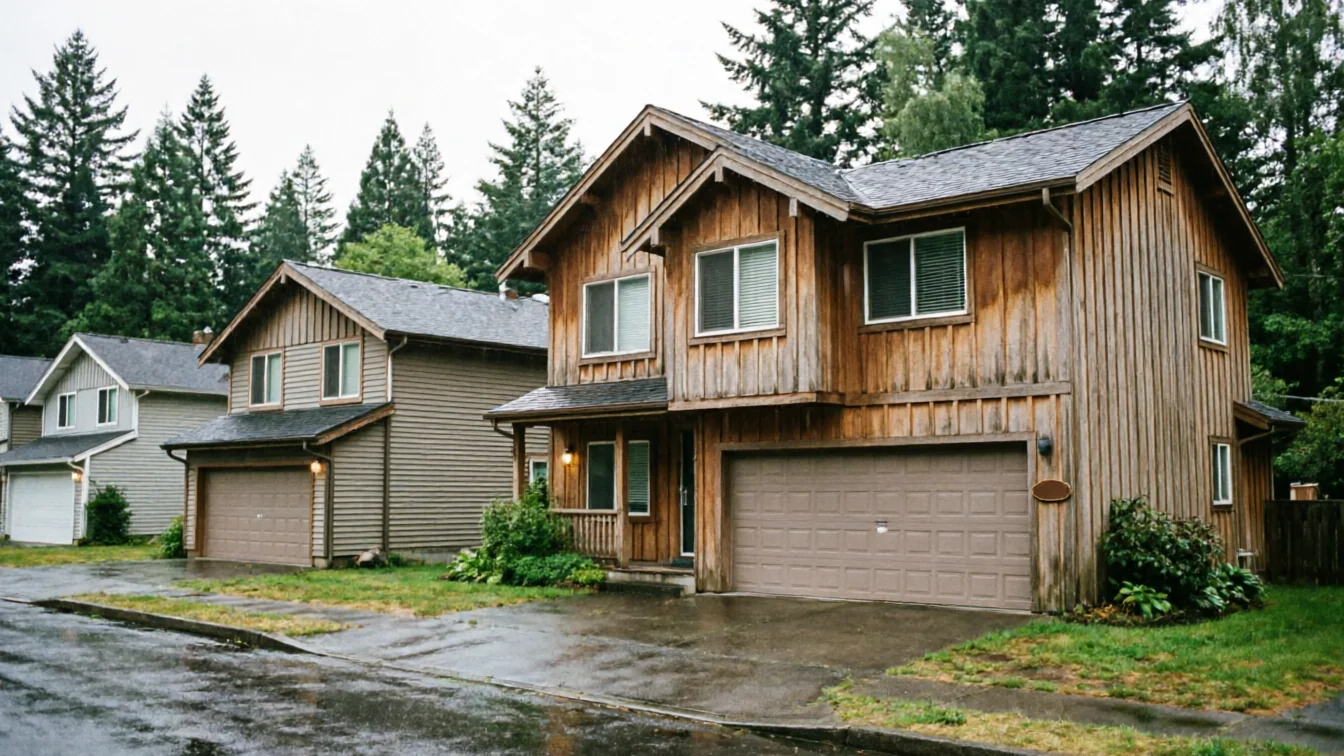
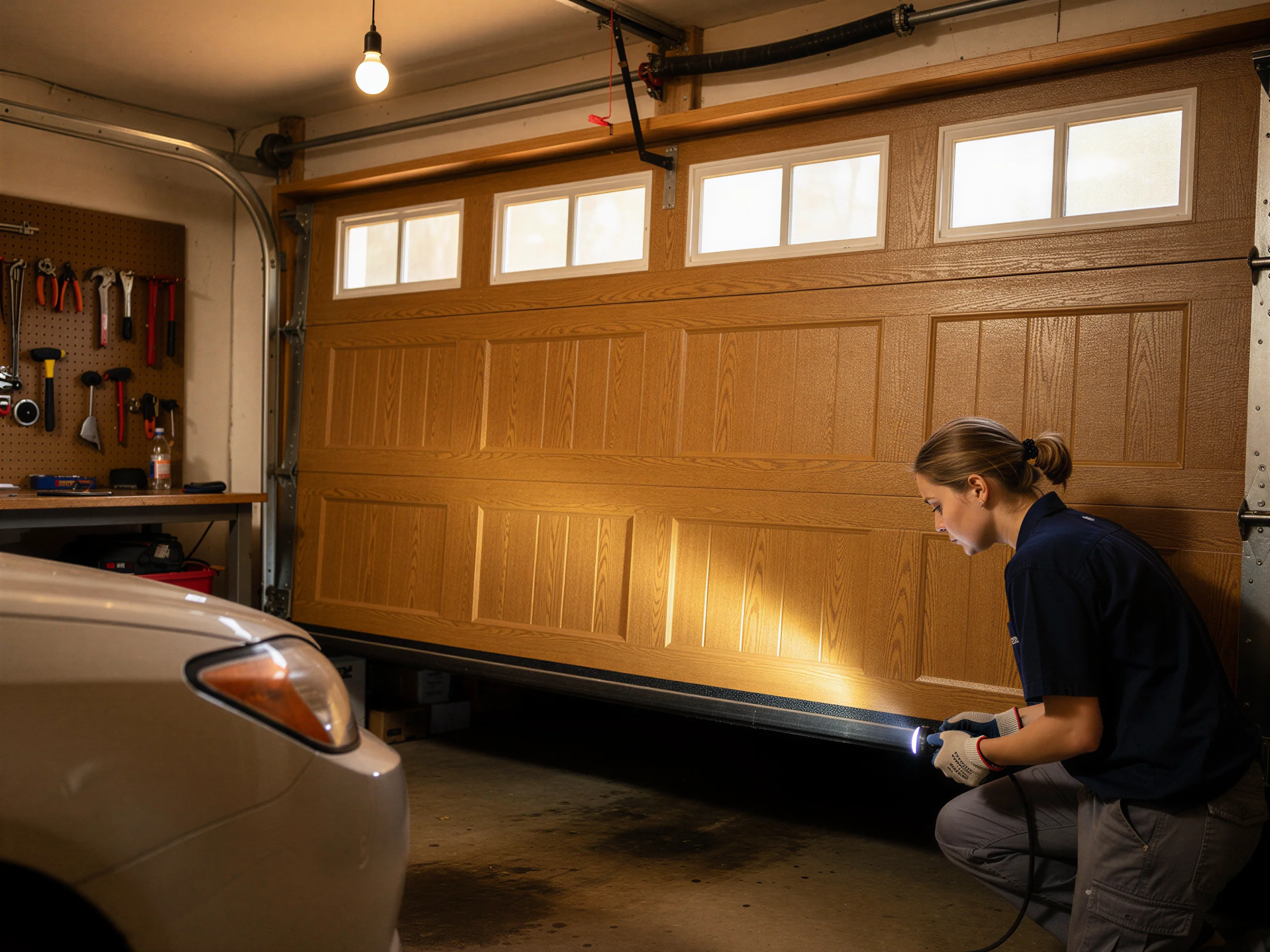
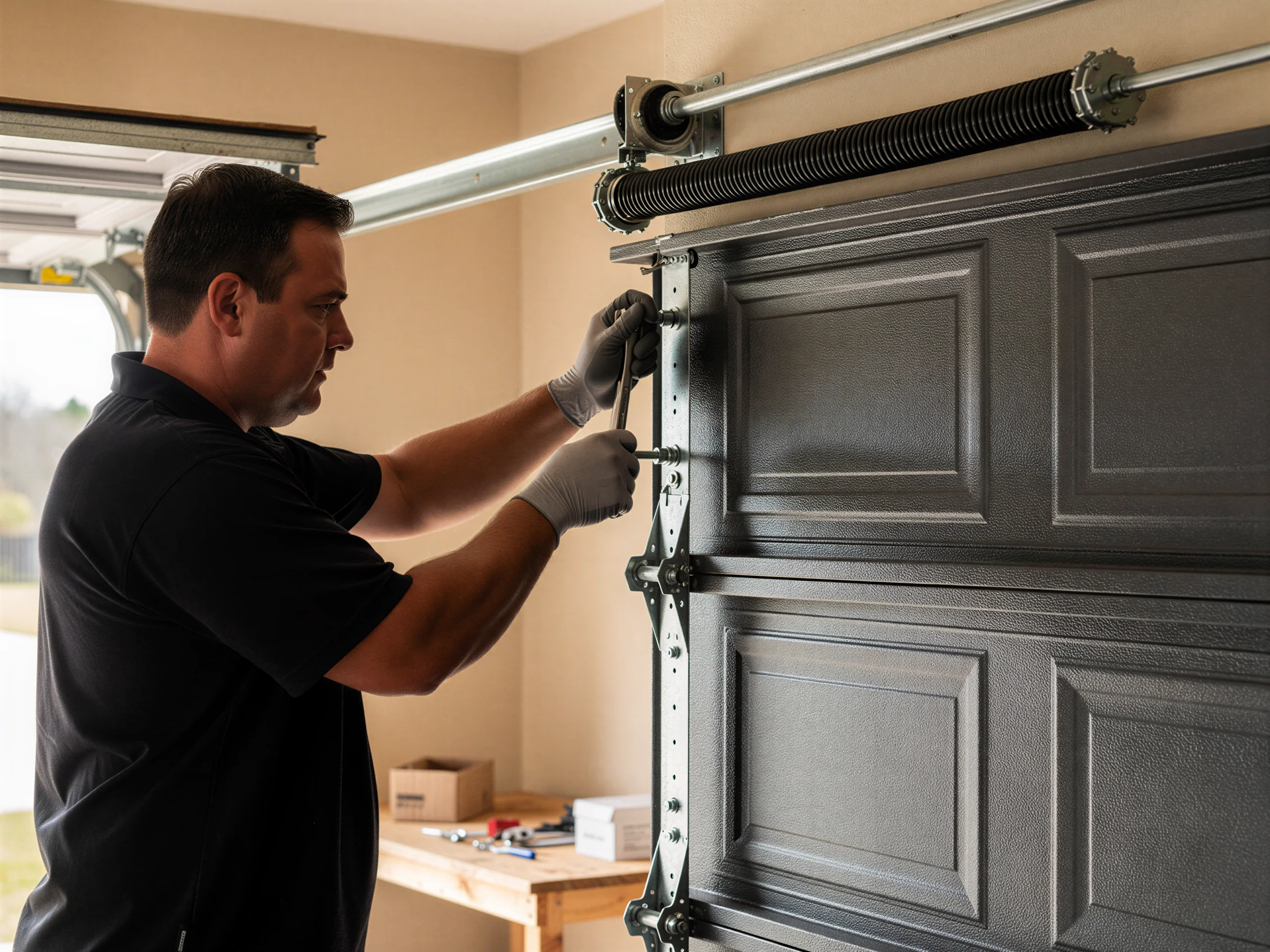
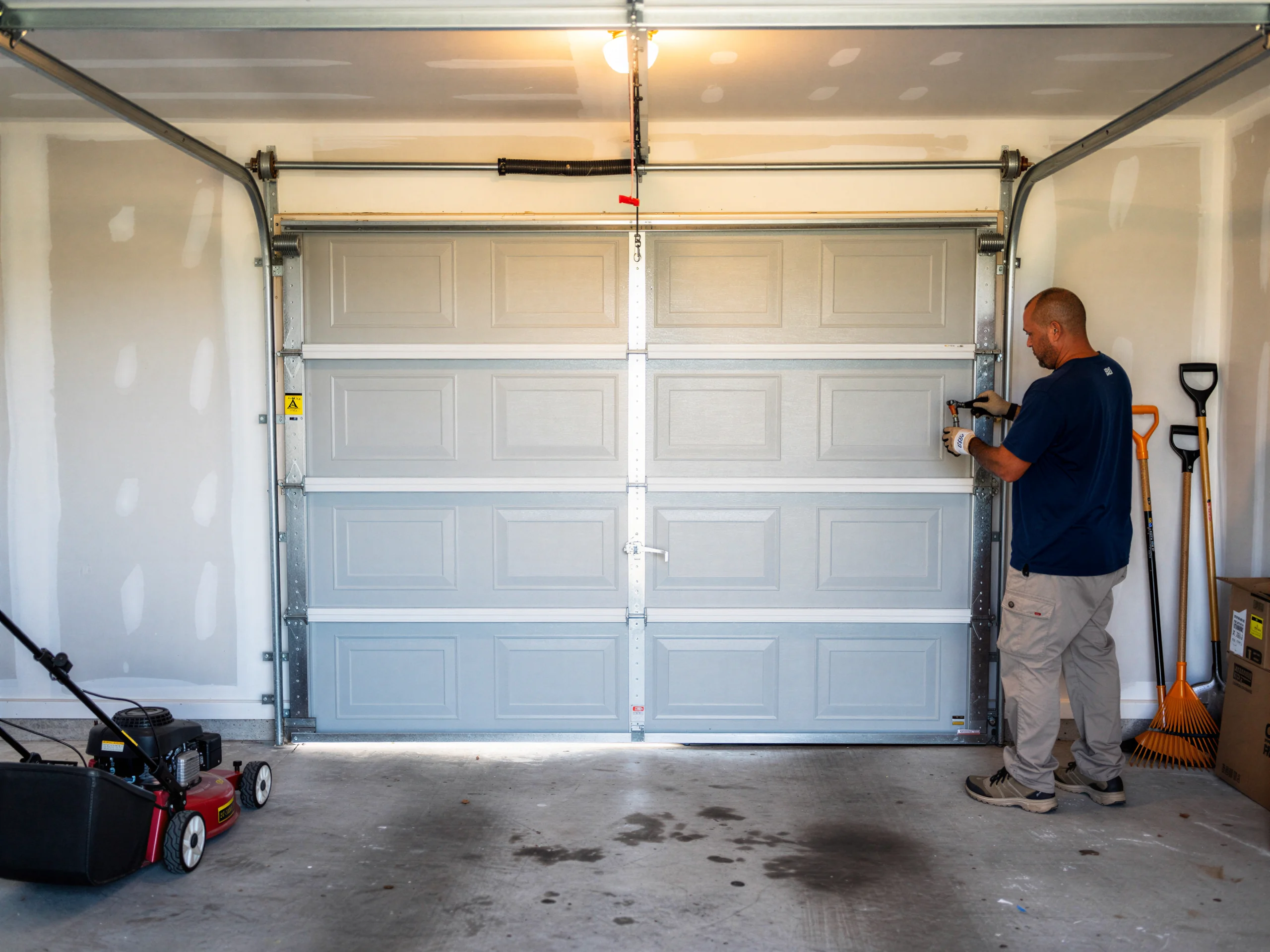
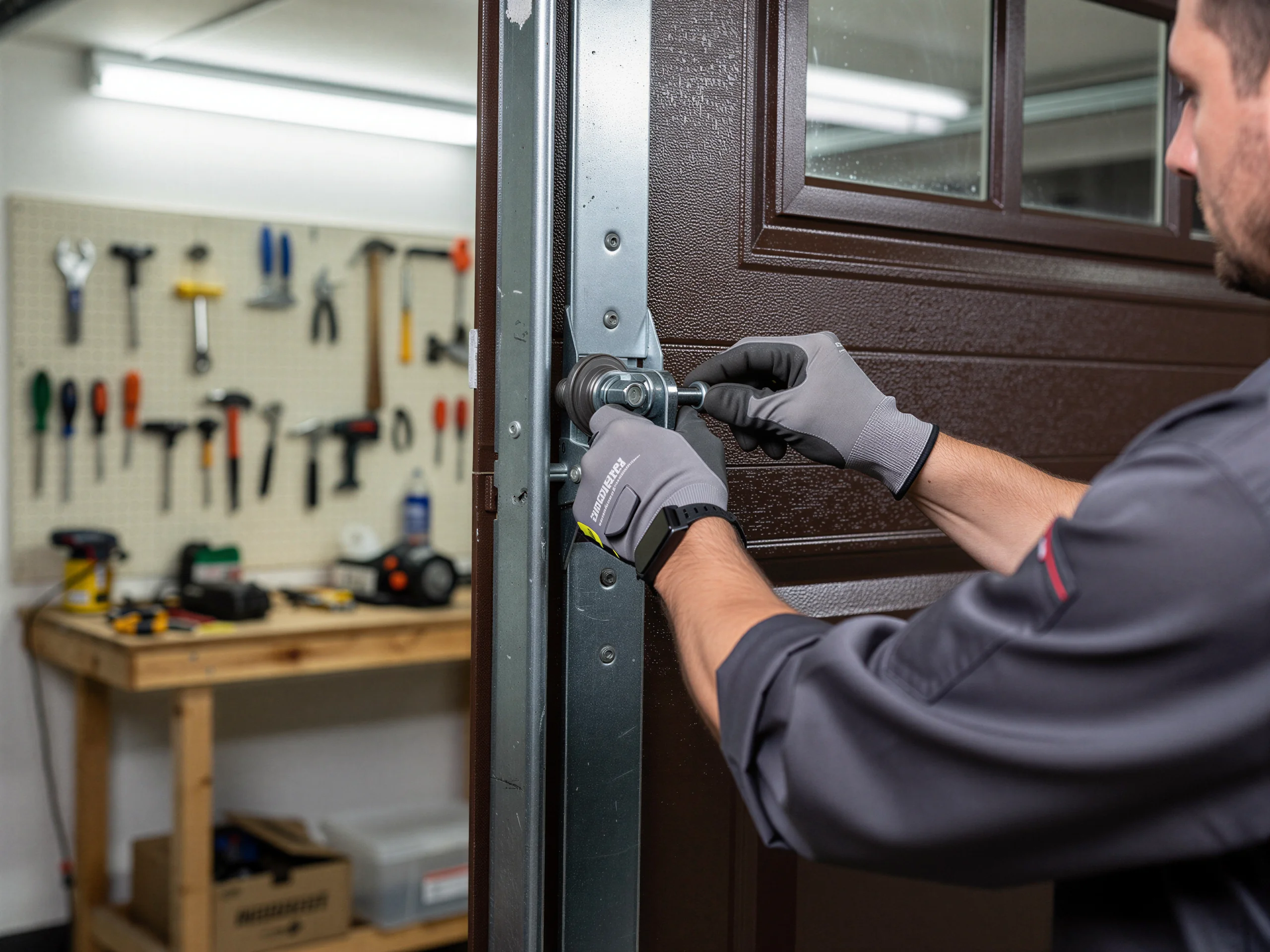
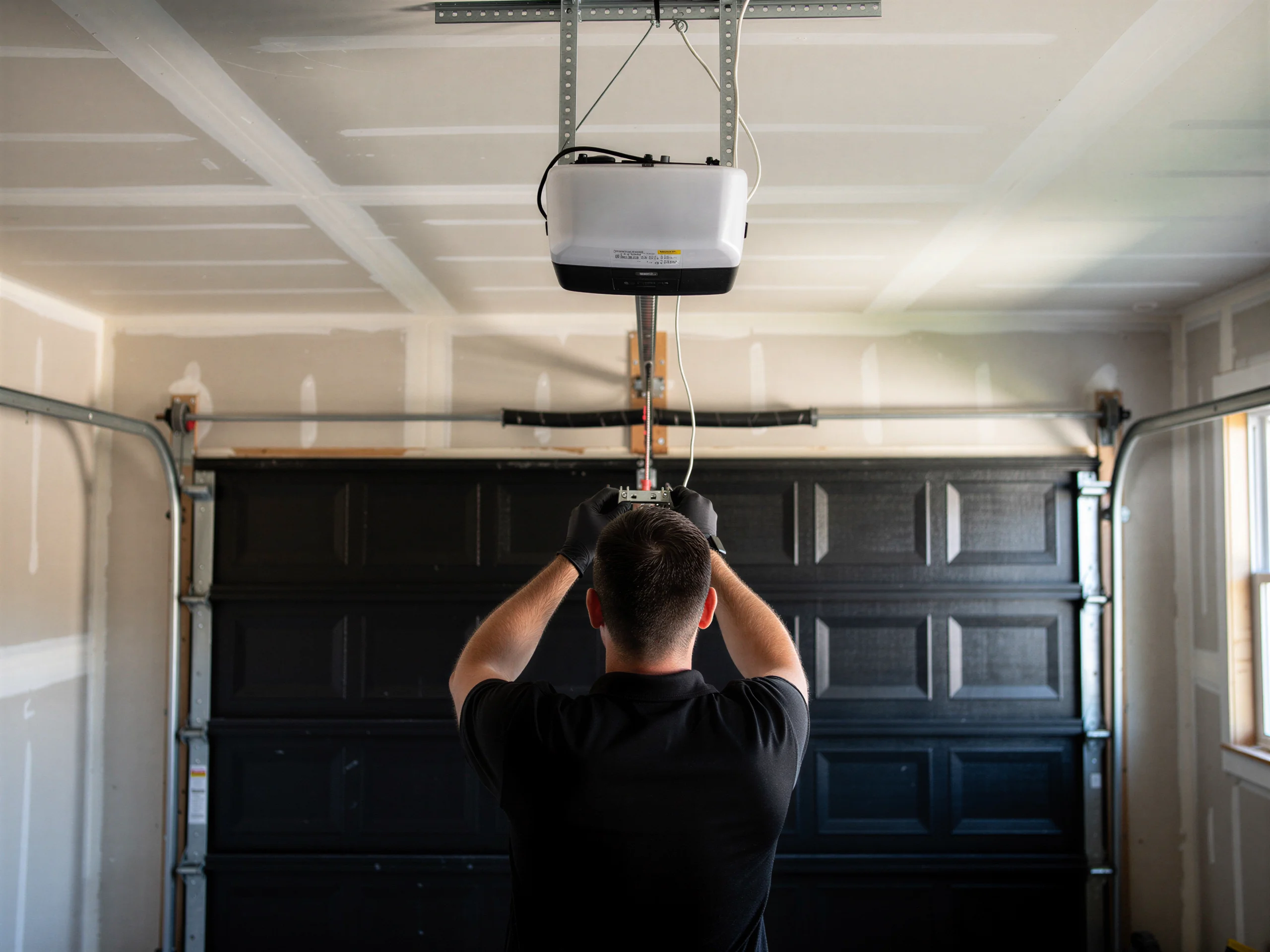
Most houses on Bainbridge Island went up around 1989, and a lot of those garage doors still have their original panels. That's the number that matters here more than anything else: a door installed in the late '80s has had roughly three and a half decades of seam flex, hinge wear, and moisture cycling before anyone thinks to replace a section. What you're usually looking at isn't cosmetic. A bottom panel that's buckled or bowed in from a bump, or a middle section with a crack running along the seam where the steel has fatigued. On doors this old the panel skin is thinner than what's sold today, and the foam-core sandwich construction common in that era doesn't flex the same way modern doors do - it dents and stays dented. If one section is damaged, the rest of the door is still original too, which changes what we're actually replacing versus just patching.