Spring pitting over years
It's not rust overnight, it's slow pitting that weakens the wire over years, which is exactly why a spring that held fine for 25 years can snap in year 30 with no warning.
Bainbridge Island, Shoreline
Garage door repair for Bainbridge Island homes built around 1989, steel sectional doors on galvanized torsion hardware, serviced from Shoreline, 11 miles out.
DIY or pro
Serving Shoreline, WA
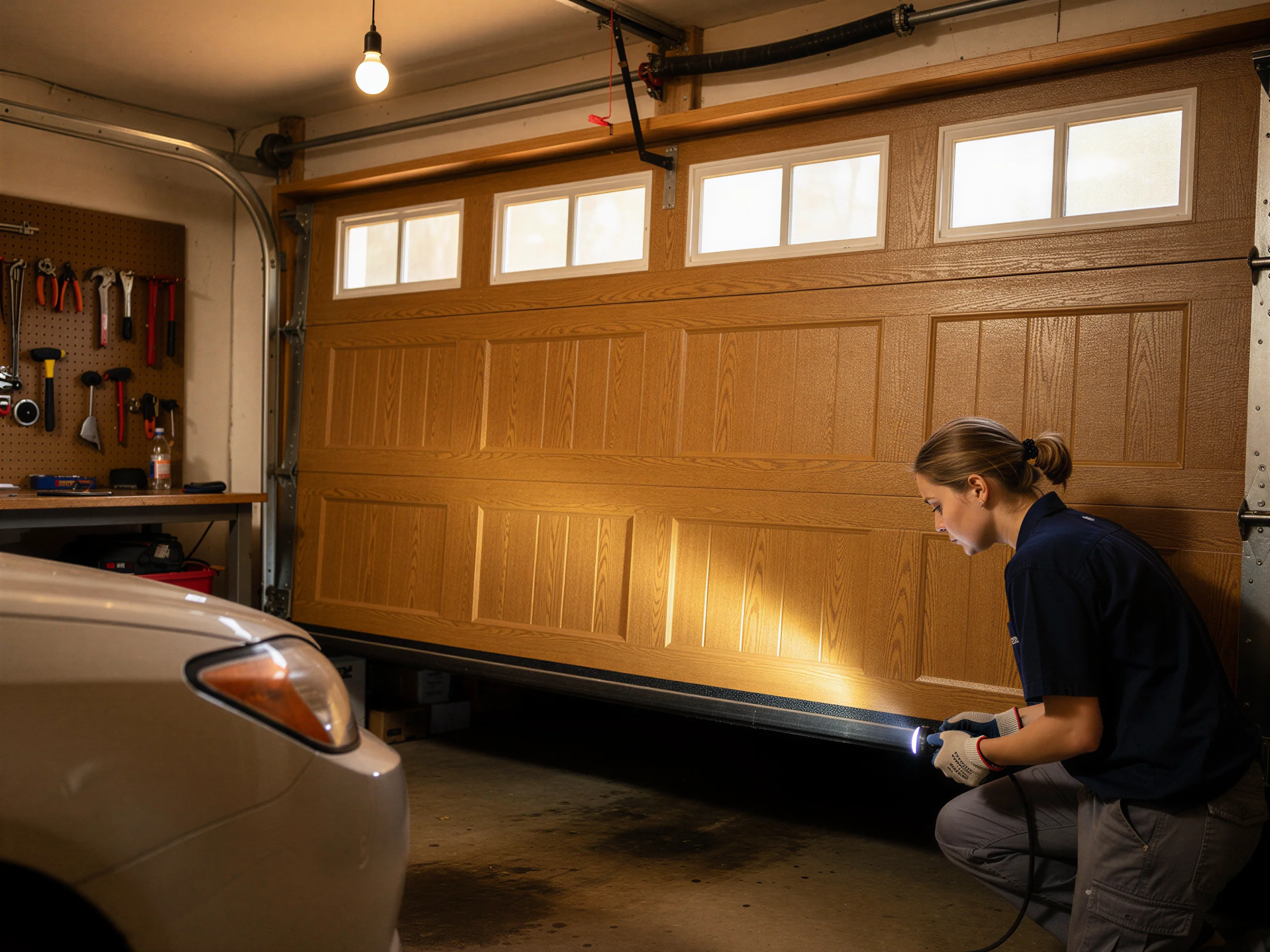
Tightening loose bracket bolts or lubricating a track is reasonable weekend work. A torsion spring is not. The spring on a double door built in this period holds enough stored tension to break a wrist or worse if the winding cone slips, and the tools to do it safely aren't something most garages have lying around. Track realignment also isn't a good DIY call once the door's out of plumb, because a door that drops off a bent track mid-cycle is a liability, not a minor fix. If the issue is a noisy roller or a loose hinge, that's fair to tackle yourself. If the door won't open, won't stay up, or the spring has visibly separated, that's a call, not a project.
Local causes
The climate here runs cold and moderate rather than extreme, but three decades of damp winters still take a toll on the galvanized coating on torsion springs and track hardware from the 1989-ish build era.
It's not rust overnight, it's slow pitting that weakens the wire over years, which is exactly why a spring that held fine for 25 years can snap in year 30 with no warning.
Combine that with original steel rollers instead of nylon, and the track wear compounds faster than it would on a newer door. None of this is dramatic weather damage, it's just time and moisture doing what they do to galvanized steel on a door that's never been swapped since the house was built.
Watch-outs
The job gets harder when a homeowner's opener has already been upgraded once or twice since 1989 but the door hardware underneath never was. A newer opener pushing against an old, slightly out-of-plumb track or a spring that's not quite matched to the door's actual weight will work for a while and then fail at the worst moment, usually the opener motor straining and burning out trying to lift a door that's fighting its own hardware. The other spot it goes sideways is a bottom panel that's rusted from sitting low near grade; patching it looks like a fix but the panel's structural integrity is gone, and the door will sag again within a season. At that point the honest advice is to stop patching and replace.
Warning signs
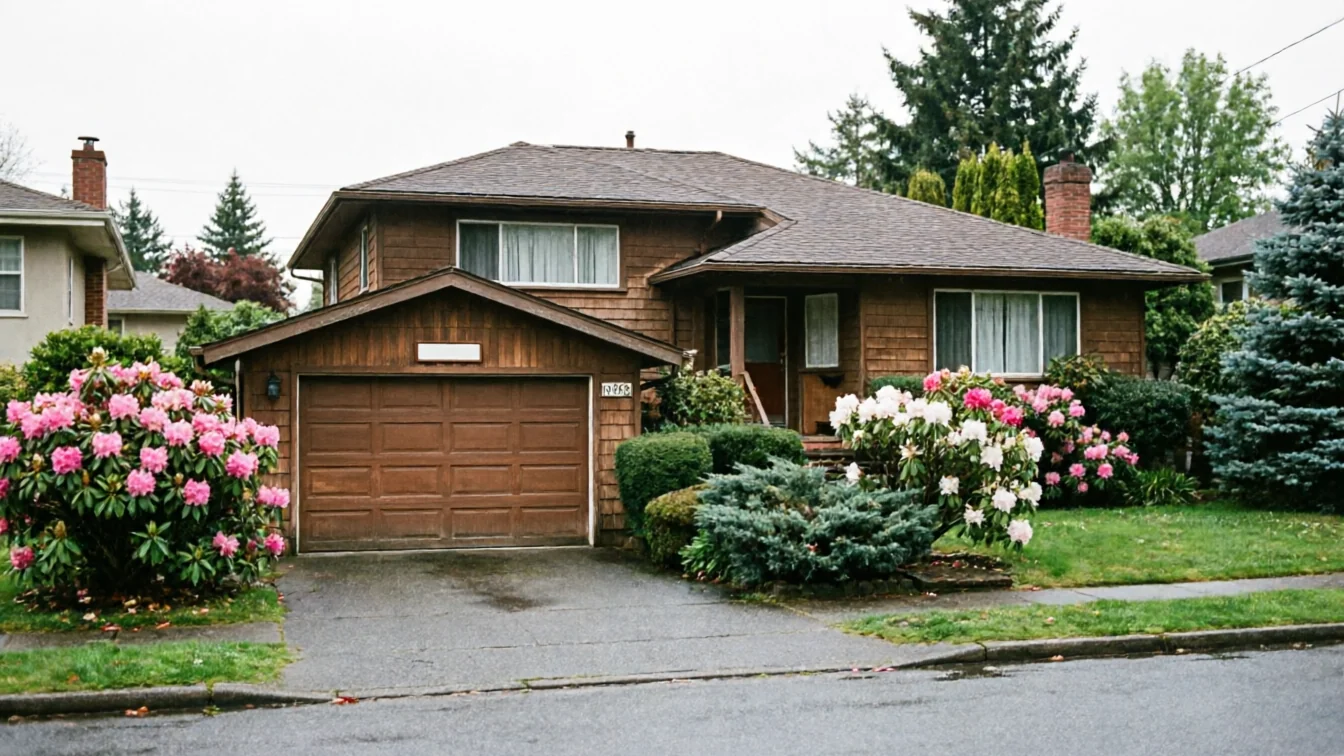
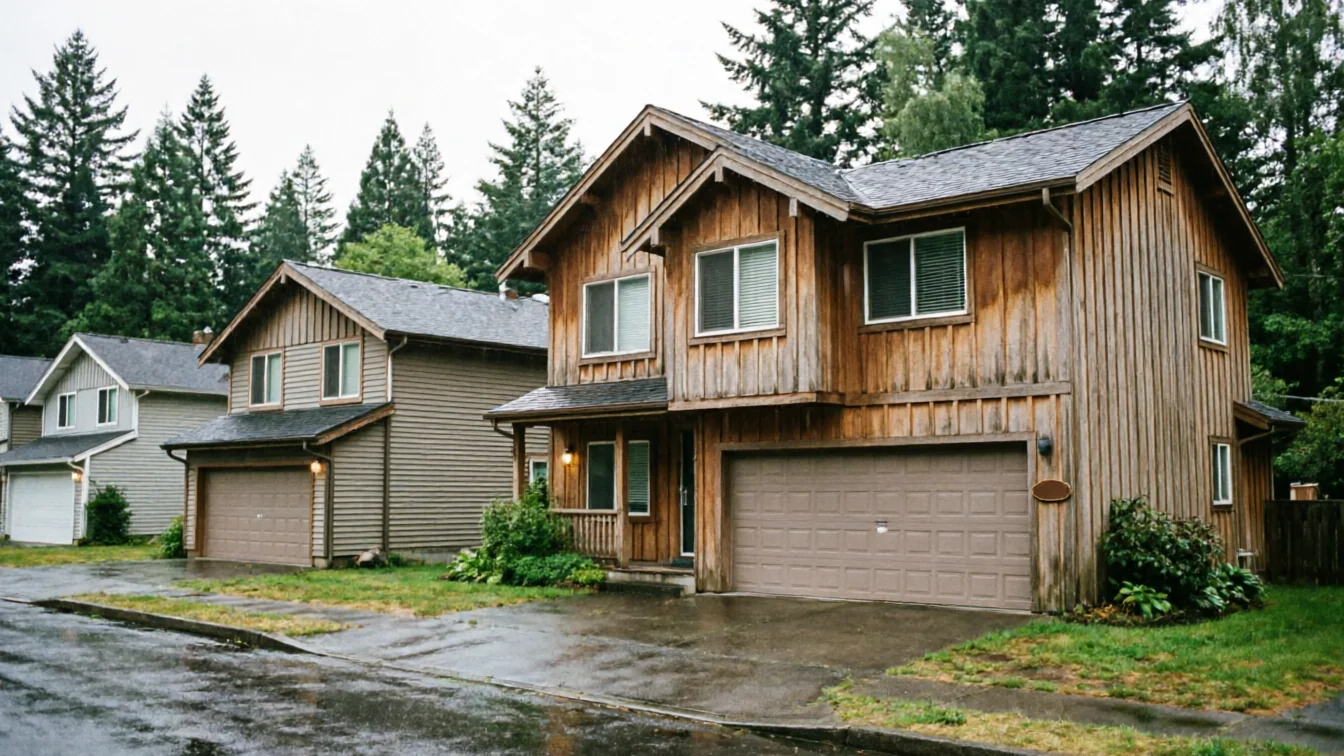
Most garages on Bainbridge Island went up with the house around 1989, give or take a few years either side. That means the door itself is almost always a steel sectional, raised-panel, either a single 9x7 or a double 16x7, hung on galvanized torsion hardware rather than the older extension-spring setups you'd find in a pre-1970s build. These doors were built for a straightforward track run, no insulation core in most of them, just a single skin of steel over a plain frame. The fault that shows up here is predictable: the torsion spring on a 30-plus-year-old double door has done tens of thousands of cycles, and when it goes, it goes hard, usually with a bang loud enough to bring someone out of the house. The second common call is the roller track bending at the bottom bracket, because the original rollers were steel-on-steel, not nylon, and they've worn the track lip down over three decades.
Job timing
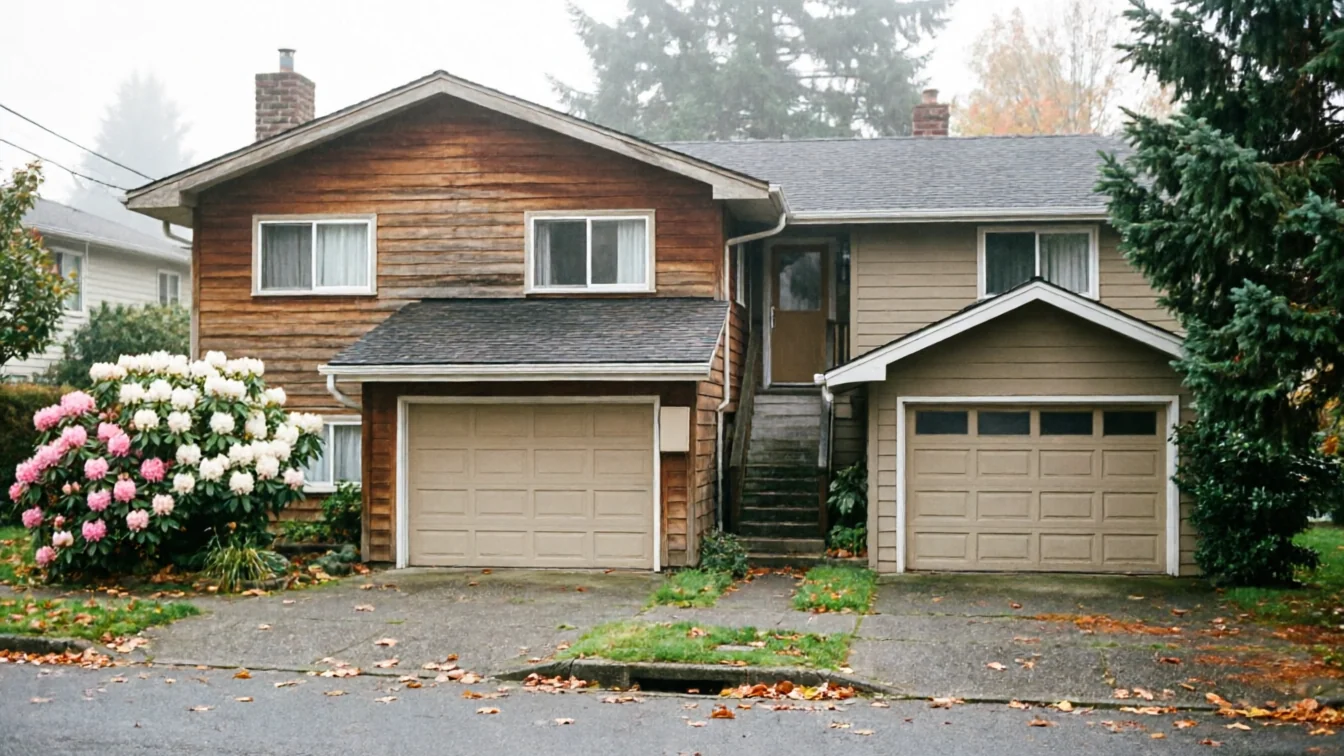
A spring swap on a door this age is usually a same-visit repair once the tech is on site, since the sizing on a 1989-era double door is standard and doesn't need custom order parts. Where it runs longer is track and bracket work, because a bent track on a door from this period often means the bottom bracket has worked loose too, and that's two problems from the same root cause, not one. We travel from Shoreline for this call, about 11 miles out, so the job gets scheduled rather than handled as a drive-by; plan the visit around that distance rather than expecting a same-hour arrival.
The repair
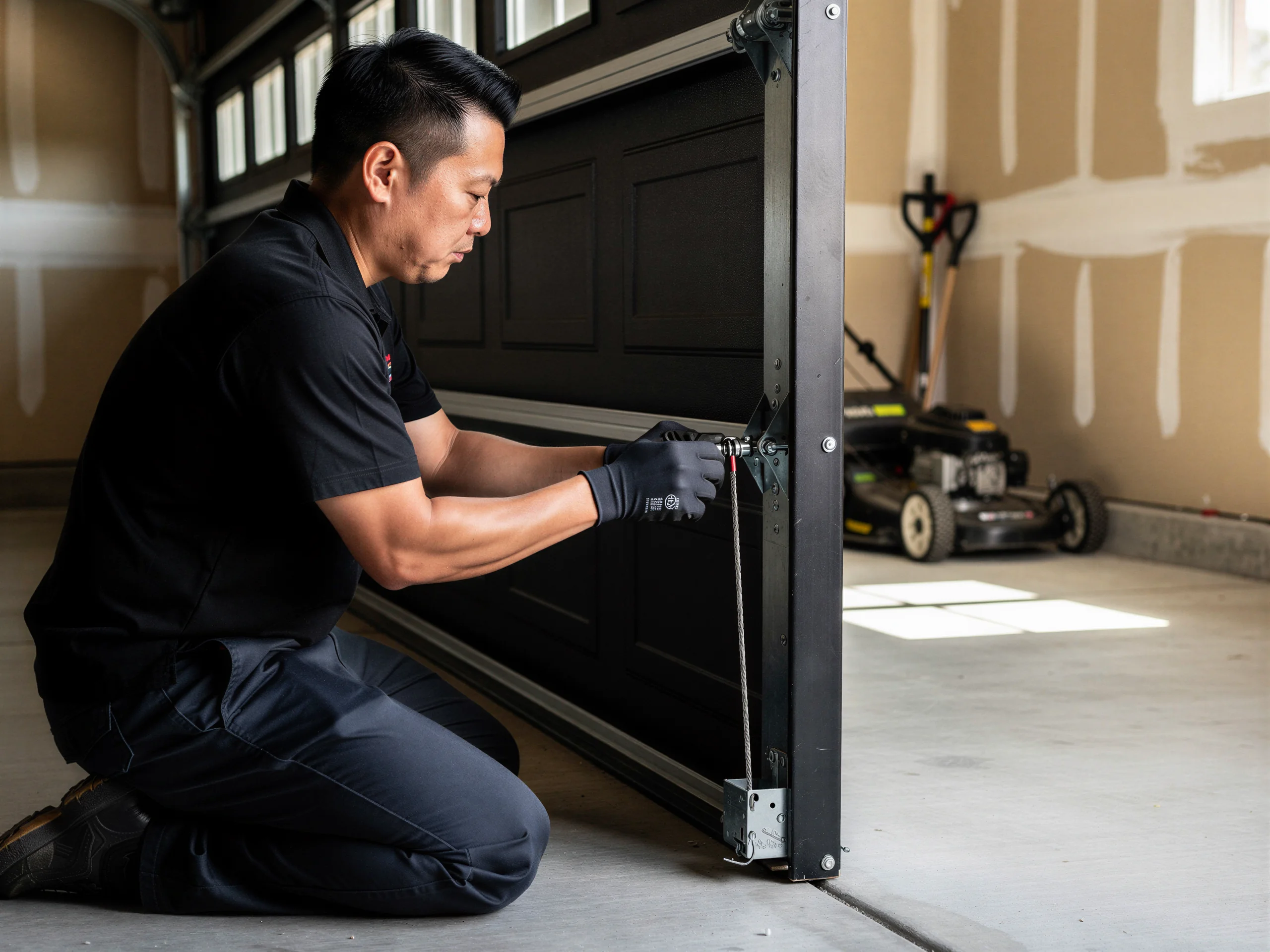
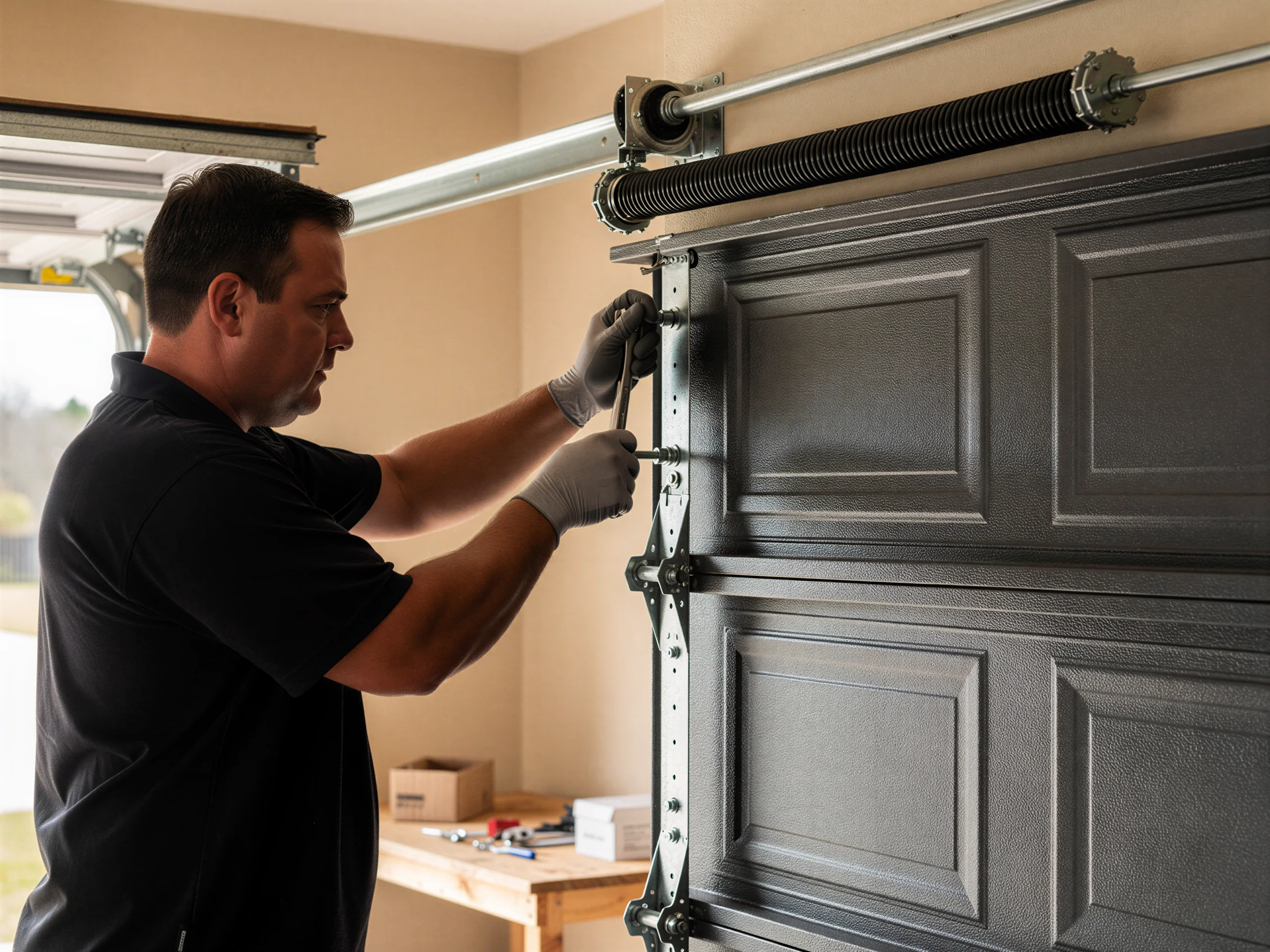
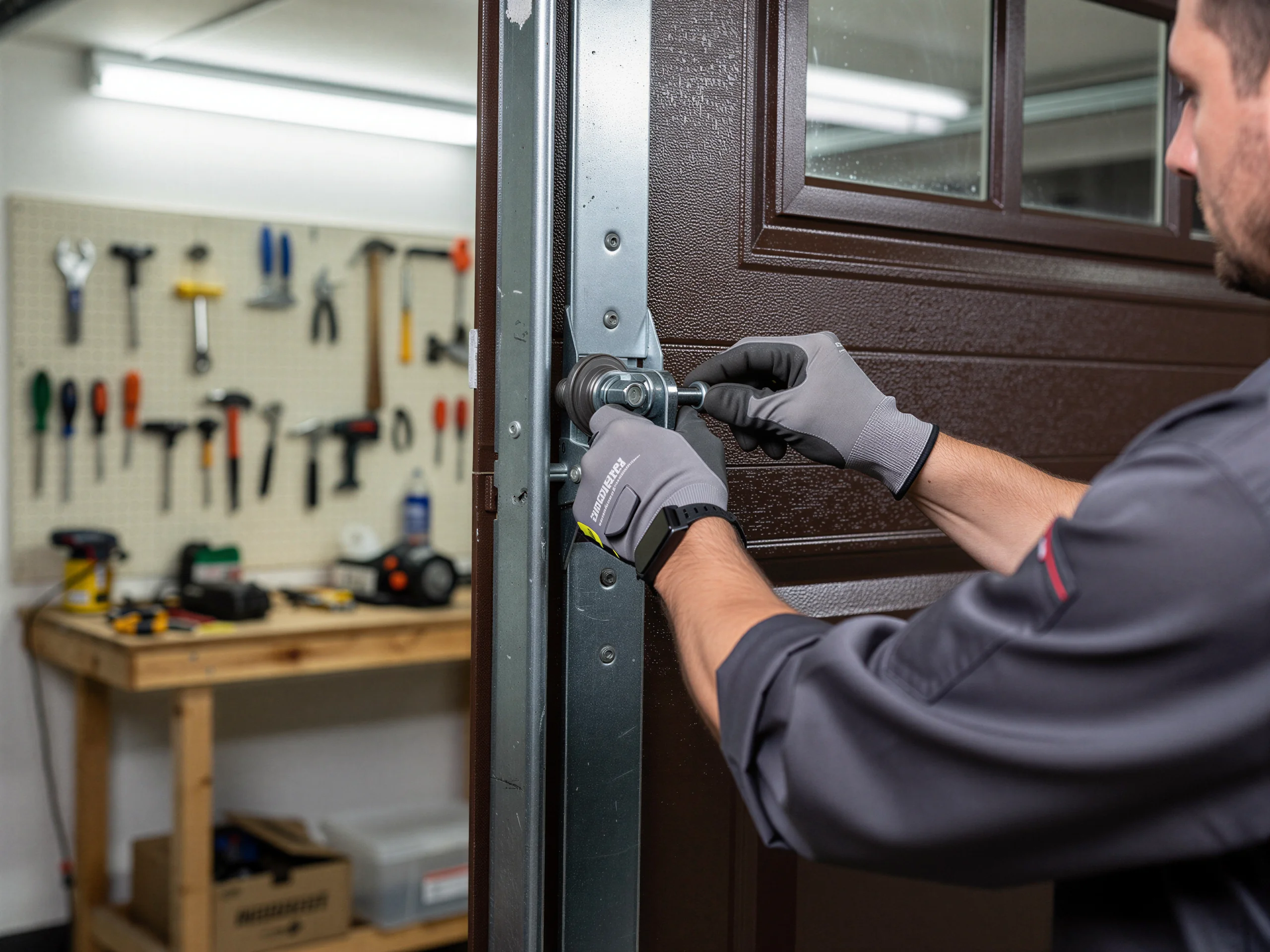
For a torsion spring on a double door from this era, the tech matches the wire gauge and wind to what's already on the shaft, not a generic size, because off-spec springs on an old door either underperform or overload the opener.
Track work means checking the bracket bolts for stripped holes in wood that's been expanding and contracting through a few decades of Puget Sound winters, and resetting the plumb on the track rather than just bolting it back where it was.
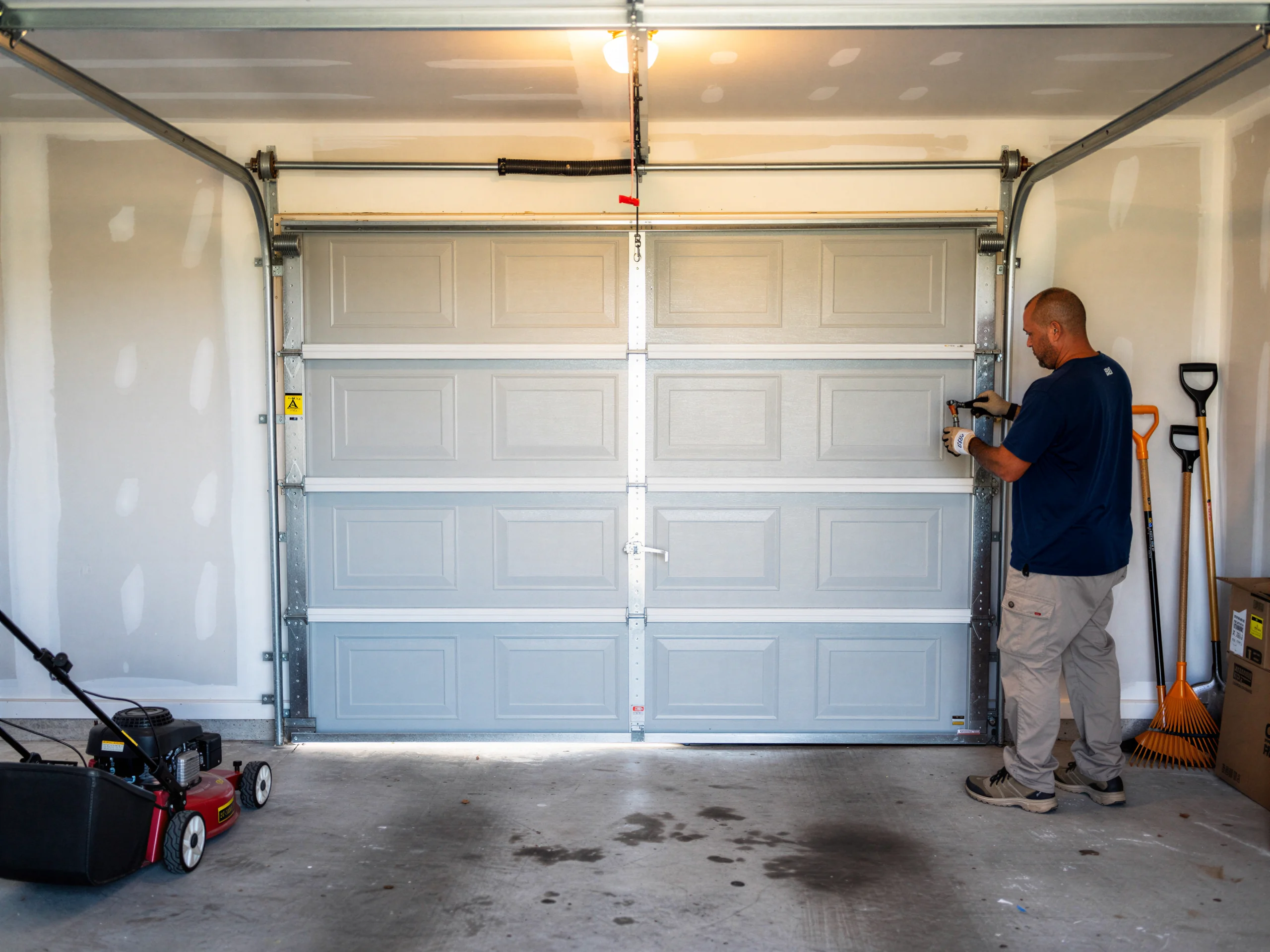
On a steel door with no insulation layer, there's no foam core to work around, which actually makes panel and hardware access simpler than on a newer insulated door.
If a panel's rusted through at the bottom, which happens on ground-level doors that sit low to grade, replacement panel stock for a 30-plus-year-old design isn't always available, and the honest call at that point is a new door section, or a new door.
Questions
It's common on Bainbridge Island. Many doors from that era are still in place, especially steel sectional doors on torsion hardware, since they're durable if the spring and track get serviced. If no one's touched the spring or rollers since the house was built, it's due.
Bainbridge Island is about 11 miles from our Shoreline base. We schedule calls out here rather than treating them as drive-bys, so expect a booked visit rather than an immediate same-hour arrival.
Sometimes, if the bend is minor and the bracket bolts haven't stripped. On a door from the late 1980s, worn steel rollers often mean the track lip is worn too, not just bent, and in that case replacing a section is more reliable than bending it back.
Torsion springs on doors from this era have usually done tens of thousands of cycles. Galvanized coating wears slowly from damp winters over decades, and the wire weakens underneath without visible signs until it lets go.
Explore more
Ready when you are
Shoreline Garage Door Pros repairs and installs garage doors, springs and openers in Shoreline, WA and the surrounding area.